










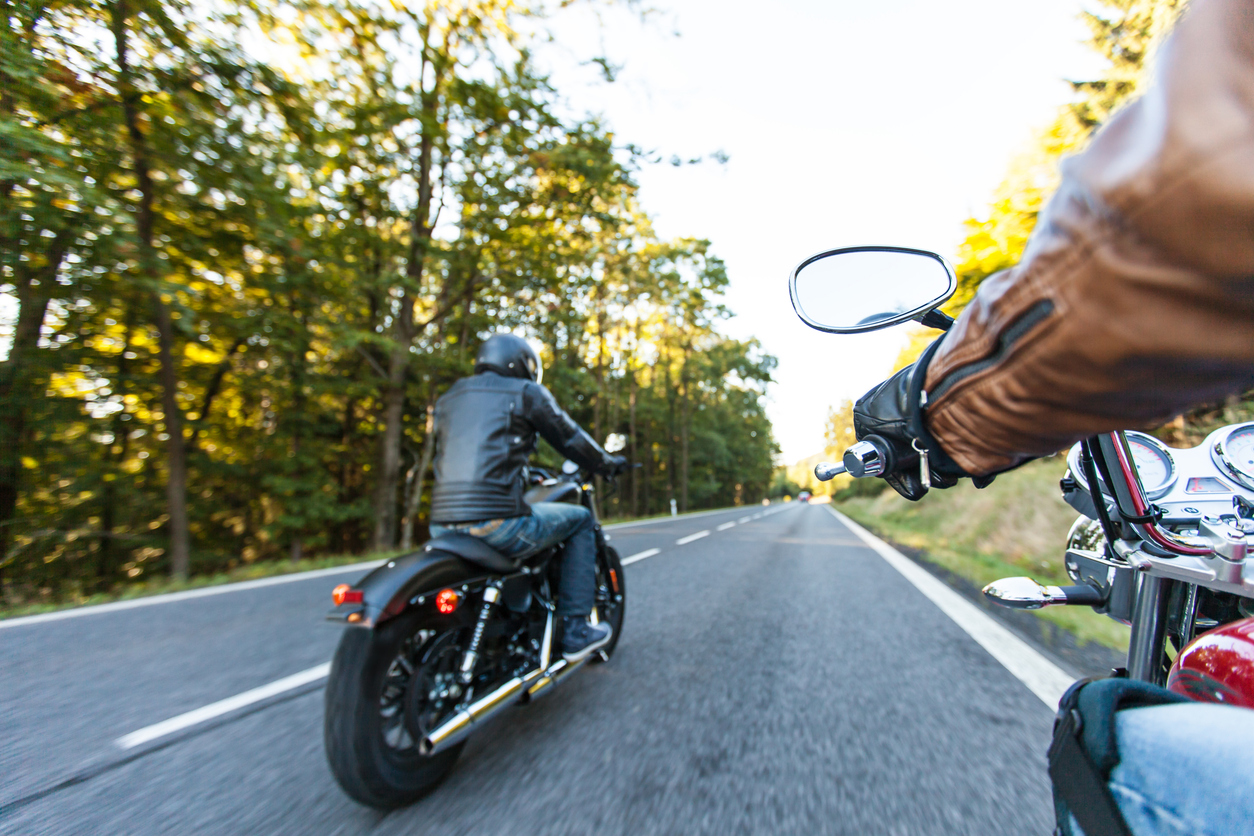
Motorcycle crashes on San Diego freeways often happen in a split second, but the conditions that lead to them develop long before impact. One of the most common and dangerous scenarios involves blind spot collisions, where a driver changes lanes directly into a motorcyclist they claim they never saw.
These crashes are rarely unavoidable. They are typically the result of driver inattention, poor scanning habits, or failure to account for smaller vehicles in high-speed traffic. For injured riders, understanding how these collisions occur and how liability is evaluated is critical.
Why Blind Spots Pose a Serious Risk for Motorcyclists
Every vehicle has blind spots, but on multi-lane freeways, those blind spots become far more dangerous. Motorcycles are smaller, narrower, and easier to overlook, especially when drivers rely too heavily on mirrors instead of actively checking their surroundings.
On San Diego freeways, this risk is amplified by:
- High traffic volume and constant lane changes.
- Drivers merging at varying speeds.
- Wide multi-lane corridors that encourage frequent repositioning.
- Congestion that compresses spacing between vehicles.
When a driver fails to check a blind spot before changing lanes properly, a motorcycle can be directly in the vehicle’s path with little or no time to react.
Common Freeway Scenarios That Lead to Blind Spot Collisions
Blind spot crashes involving motorcycles often follow predictable patterns. These are not random events but recurring situations in which driver behavior plays a central role.
Common scenarios include:
- Lane changes without a full head check.
- Drivers drifting into adjacent lanes during heavy traffic.
- Sudden merges to avoid missed exits or slowdowns.
- Vehicles attempting to move around congestion quickly.
- Simultaneous lane changes by multiple drivers.
In many cases, the driver later states they “didn’t see the motorcycle,” which reflects a failure to look carefully rather than the absence of the rider.
Why These Collisions Often Result in Severe Injuries
When a motorcycle is struck during a lane change, the rider is typically hit from the side or forced off balance at freeway speeds. Even a slight impact can destabilize the bike and lead to a secondary crash with the roadway or other vehicles.
These collisions frequently result in:
- Traumatic brain injuries, even with helmet use.
- Spinal cord and neck injuries.
- Fractures involving the arms, legs, or pelvis.
- Road rash and soft tissue damage.
- Multi-vehicle impacts after the initial collision.
Because there is no structural protection, the rider absorbs the full force of both the initial impact and any subsequent contact with the roadway.
The “I Didn’t See Them” Defense and How It Affects Claims
Drivers involved in blind-spot collisions almost always cite the same explanation: they did not see the motorcycle. While this statement is common, it does not eliminate responsibility.
Drivers have a legal duty to:
- Check mirrors and physically look before changing lanes.
- Ensure the adjacent lane is clear.
- Account for smaller vehicles that may not be immediately visible.
- Avoid unsafe lane changes at all times.
Failure to see a motorcyclist is often treated as a failure to exercise reasonable care rather than as a valid excuse. However, insurance companies still use this argument to create doubt and reduce liability.
How Insurance Companies Shift Blame Onto Motorcyclists
Even in clear blind spot collisions, insurers frequently attempt to shift responsibility onto the rider. These arguments are designed to reduce payouts rather than reflect what actually occurred.
Common tactics include:
- Claiming the motorcycle was speeding or lane splitting unsafely.
- Arguing the rider was in a position where they were difficult to see.
- Suggesting the motorcyclist failed to anticipate the lane change.
- Asserting shared fault under California’s comparative negligence rules.
These strategies can significantly reduce compensation if not challenged with strong evidence.
The Evidence That Strengthens Blind Spot Collision Claims
Because these crashes happen quickly, physical evidence becomes essential in reconstructing what occurred. A detailed investigation can clarify whether the driver had the opportunity to see the motorcycle and failed to act on it.
Important evidence may include:
- Traffic camera or dashcam footage.
- Witness statements from nearby drivers.
- Vehicle positioning and damage analysis.
- Lane markings and roadway design.
- Data related to speed and braking.
- Medical records documenting injury severity.
This evidence helps establish that the motorcyclist was in a visible position and that the lane change was unsafe.
Why Freeway Crashes in San Diego Require Close Investigation
San Diego’s freeway system presents unique challenges for motorcyclists. High-speed traffic, frequent merging zones, and dense commuter patterns create conditions where small errors can lead to serious consequences.
In many cases, determining fault requires examining:
- Traffic flow at the time of the crash.
- Visibility conditions and lane positioning.
- Driver decision-making in the moments before impact.
- Whether the driver had sufficient time to avoid the collision.
Without this level of analysis, insurers may default to incomplete or biased interpretations of what happened.
How National Injury Help Assists Injured Motorcyclists
At National Injury Help, our San Diego motorcycle injury attorneys understand how blind spot collisions occur and how insurance companies defend them. These cases require more than a basic claim. They require a detailed, evidence-driven approach that addresses both liability and long-term impact.
Our team works to:
- Investigate how the lane change occurred.
- Challenge claims that the rider was not visible.
- Document the full extent of injuries and future needs.
- Pursue compensation for medical care, lost income, and long-term consequences.
If you were injured in a motorcycle crash on a San Diego freeway, contact National Injury Help for a free consultation. Our San Diego Personal Injury attorneys are ready to help you understand your rights and pursue the compensation you need to move forward.
Related Blogs
- Motorcycle Safety Gear: Can It Influence the Outcome of a California Personal Injury Claim?
- Catastrophic Leg Injuries After Motorcycle Crashes in San Diego: What Victims Need to Know
Note: The information provided in this article is based on reports from publicly available sources, including news outlets, police reports, and eyewitness accounts. National Injury Help has not independently verified all details of the reported incident. If you find any inaccurate or outdated information, please contact us, and we will review and update the content as appropriate. The photo used in this post is for illustrative purposes only and does not depict the actual scene of the incident.
Disclaimer: The content of this article is intended for informational purposes only and does not constitute legal advice or establish an attorney-client relationship with National Injury Help. For legal assistance specific to your case, we encourage you to contact a qualified attorney.
Related Posts
Motorcycle Safety Gear: Can It Influence the Outcome...
Riding a motorcycle offers freedom and adventure on California’s roads, but comes with real risks....
Comparative Negligence in California: When Pedestrians Are Blamed...
Pedestrians are often told they have the right-of-way. Yet after a serious collision, many injured...

Dog Attacks Involving Children on Shared Community Property...
Dog attacks involving children often happen in places where families feel safe. In California, many of...
Free Case Evaluation
Contact Us today for a FREE, Immediate Case Evaluation
Contact Us today for a FREE, Immediate Case Evaluation
Categories
Recent posts
- Why Helmet Law Disputes Can Complicate Motorcycle Injury Claims in California
- What Victims Need to Know When Dog Bite Injuries Exceed Insurance Policy Limits
- What Happens When an Out-of-State Driver Injures a Cyclist in California?
- The Legal Significance of Personality Changes After a Traumatic Brain Injury
- The Financial Burden of Long-Term Cognitive Rehabilitation After an Accident
What Our Clients Say