










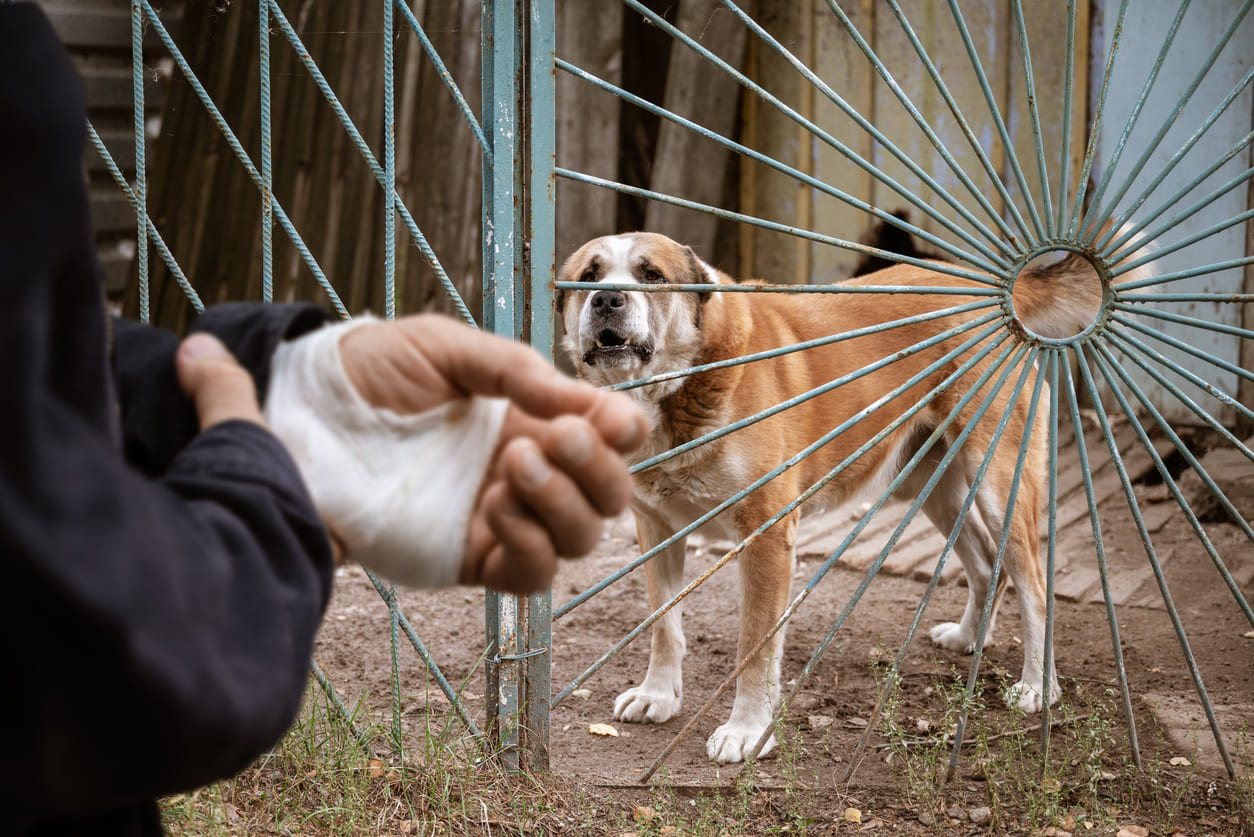
Dog bites do not just happen in parks or on sidewalks. In San Diego, many attacks occur inside or around private homes, often involving workers who are there to perform a service. Delivery drivers, utility workers, home health aides, cleaners, and contractors regularly enter unfamiliar properties where dogs may be present. When a bite occurs in this setting, victims are often left with serious injuries and immediate questions about who is responsible.
Understanding how liability works in these situations is critical, especially when multiple parties or insurance policies may be involved.
Why Home Service Visits Create Unique Risks
Service workers and invited visitors often enter properties without knowing whether a dog is present or how it may behave. Even dogs that appear calm can react unpredictably when a stranger enters their territory.
Common risk factors during home visits include:
- Dogs are not being restrained or secured before a worker arrives.
- Lack of warning about the presence of a dog.
- Owners assume their dog is “friendly” without taking precautions.
- Workers moving through gates, yards, or interior spaces where a dog is loose.
In many cases, the victim has no meaningful opportunity to avoid the encounter.
California’s Strict Liability Rule for Dog Bites
California law generally holds dog owners strictly liable when their dog bites someone, regardless of the animal’s history or the owner’s intentions. This rule applies when the victim is lawfully on the property, which includes most home service visits.
Strict liability means:
- The owner does not need prior knowledge that the dog was dangerous.
- The victim does not need to prove negligence.
- The focus is on the fact that the bite occurred and caused injury.
For service workers and invited visitors in San Diego, this law provides an important layer of protection.
When Liability May Extend Beyond the Dog Owner
While dog owners are typically responsible, certain situations may involve additional parties. Home service visits often occur within broader employment or business relationships, which can complicate how a claim is handled.
Additional liability may arise when:
- A property owner fails to warn about a known dangerous dog.
- A landlord knowingly allows a dangerous animal to remain on the property.
- A company sends workers into unsafe environments without proper protocols.
- A third party is responsible for controlling or handling the dog at the time of the incident.
Identifying all responsible parties is important, particularly when serious injuries require substantial compensation.
Common Injuries in Home Visit Dog Bite Cases
Dog bites that occur during home visits can be especially severe. Victims are often caught off guard, may be in proximity to the animal, and may not have a clear path to escape.
These injuries may include:
- Deep puncture wounds and torn tissue.
- Injuries to the hands, arms, or face.
- Nerve damage affecting movement or sensation.
- Infections requiring ongoing medical treatment.
- Permanent scarring or disfigurement.
In addition to physical harm, many victims experience lasting emotional distress, particularly when the attack occurs in a confined or unexpected setting.
How Insurance Companies Handle These Claims
Although California’s strict liability law favors victims, insurance companies still look for ways to limit their exposure. Claims involving home visits are often scrutinized more closely, especially when the victim was working at the time of the incident.
Insurers may argue:
- The victim provoked the dog.
- The victim entered an area they were not authorized to access.
- The dog’s behavior was unexpected and unavoidable.
- Workers’ compensation, rather than a liability claim, should apply.
These arguments are often used to reduce or redirect financial responsibility rather than fully address the harm caused.
The Role of Evidence in Establishing Liability
A successful dog bite claim requires clear documentation of what happened and why the victim was lawfully present on the property.
Important evidence may include:
- Work orders, delivery records, or service confirmations.
- Photographs of the scene and any warning signs, or lack thereof.
- Medical records documenting the extent of injuries.
- Animal control reports and prior complaints involving the dog.
- Witness statements from others present at the time.
This evidence helps establish both liability and the full scope of damages.
How National Injury Help Assists Dog Bite Victims
At National Injury Help, our San Diego dog bite attorneys understand the complexities of cases involving home service visits. These claims often involve overlapping legal and insurance issues that require careful analysis and strategic handling.
Our team works to:
- Identify all potentially responsible parties.
- Gather evidence that supports strict liability and damages.
- Challenge the insurance company’s efforts to minimize or deny claims.
- Pursue compensation for medical care, lost income, and long-term impact.
If a dog bit you during a home service visit in San Diego County, contact National Injury Help for a free consultation. Our attorneys are ready to help you understand your rights and pursue the compensation you deserve.
Related Blogs
- Homeowners’ Insurance Disputes in Serious San Diego Dog Bite Cases
- Compensation Beyond Medical Bills: Emotional Trauma in California Dog Bite Cases
- Understanding California’s Strict Liability Laws for Dog Bite Injuries
- Children and Dog Bites: Why they’re at Greater Risk and How Families Can Protect Them
- Beyond the Bite: Addressing Emotional Trauma After a Dog Attack in California
Note: The information provided in this article is based on reports from publicly available sources, including news outlets, police reports, and eyewitness accounts. National Injury Help has not independently verified all details of the reported incident. If you find any inaccurate or outdated information, please contact us, and we will review and update the content as appropriate. The photo used in this post is for illustrative purposes only and does not depict the actual scene of the incident.
Disclaimer: The content of this article is intended for informational purposes only and does not constitute legal advice or establish an attorney-client relationship with National Injury Help. For legal assistance specific to your case, we encourage you to contact a qualified attorney.
Related Posts

Tourist Scooter Rentals in San Diego: When Out-of-State...
San Diego’s waterfront paths, beach neighborhoods, and tourist districts make electric scooters an appealing way...
Artificial Turf – Field of Dreams or Fields...
San Diego, CA December 19, 2014 Recent studies and news articles on the ubiquitous grass...

Catastrophic Leg Injuries After Motorcycle Crashes in San...
Motorcycle crashes in San Diego often result in some of the most severe injuries seen in personal injury...
Free Case Evaluation
Contact Us today for a FREE, Immediate Case Evaluation
Contact Us today for a FREE, Immediate Case Evaluation
Categories
Recent posts
- The Financial Burden of Long-Term Cognitive Rehabilitation After an Accident
- Pedestrian Injuries in Driveway Backover Accidents in San Diego Neighborhoods
- Dog Attacks Involving Children on Shared Community Property in California
- Blind Spot Collisions Involving Motorcycles on San Diego Freeways
- Catastrophic Leg Injuries After Motorcycle Crashes in San Diego: What Victims Need to Know
What Our Clients Say