











Stay safe on the roads. Contact a skilled Redmond bicycle accident lawyer today to protect your rights and secure the compensation you deserve.
Understanding Bicycle Accidents in Redmond
- High-traffic corridors, including Redmond Way, 148th Avenue NE, and Willows Road, present collision risks
- Washington law (RCW 4.16.080) requires filing personal injury claims within three years
Redmond’s mix of busy streets, multi-use trails, and commercial areas creates environments where bicycle accidents occur regularly. Popular cycling routes, including the Sammamish River Trail and Redmond Central Connector, serve recreational riders and commuters. However, interactions between cyclists, vehicles, and pedestrians create collision risks.
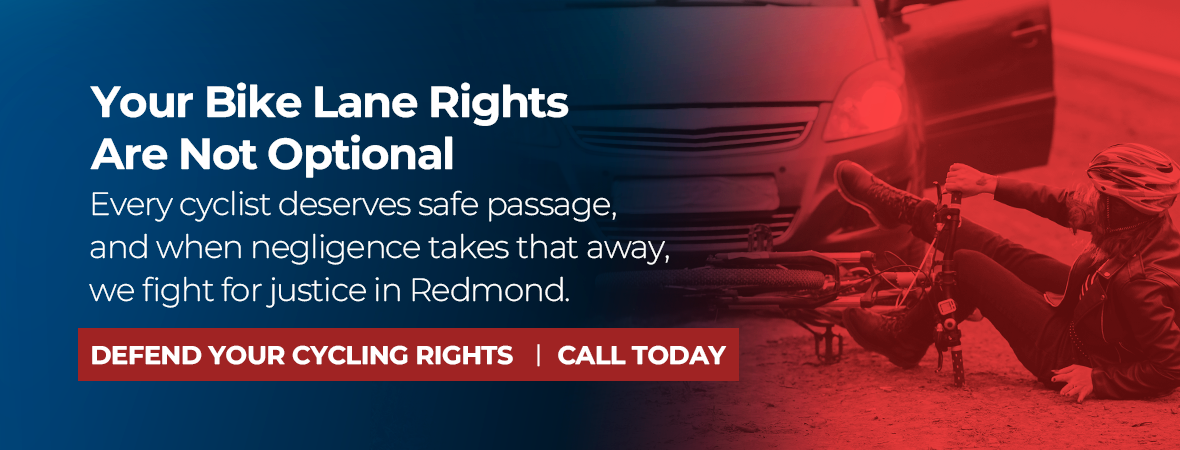
Bicycle accidents produce injuries ranging from minor cuts to catastrophic trauma. Unlike occupants in vehicles with protective frames and safety systems, cyclists have minimal protection during collisions. Even low-speed impacts can cause serious injuries requiring extensive medical treatment.
Washington law provides cyclists with specific protections. RCW 46.61.755 requires motorists to maintain at least three feet of distance when passing cyclists. Understanding these legal protections becomes important when accidents occur, and victims pursue compensation for injuries and financial losses.
No Fee Guarantee: You pay nothing unless we win your case and secure compensation for you.
Call for a Free Consultation
High-Risk Areas and Conditions
Busy Streets and Intersections
- Redmond Way, 148th Avenue NE, and Willows Road experience heavy traffic volumes
- Intersections near downtown, schools, and commercial areas see frequent cyclist-vehicle conflicts
Traffic volume creates collision risks at major intersections throughout Redmond. Turning vehicles, limited visibility, and multiple traffic movements increase dangers for cyclists. Downtown areas with narrow lanes and frequent parking maneuvers add complexity to navigation.
Intersection accidents often occur when drivers fail to yield right-of-way, turn without checking for cyclists, or misjudge cyclist speeds. Police reports and witness statements document these violation patterns, providing evidence for liability claims.
Multi-Use Trails
- The Sammamish River Trail and the Redmond Central Connector serve cyclists and pedestrians
- Trail intersections with roads, uneven surfaces, and visibility issues create hazards
Multi-use trails bring together cyclists, pedestrians, and sometimes vehicles at crossing points. Intersections where trails cross streets require cyclists to enter traffic, creating collision opportunities. Trail surface conditions, including cracks, roots, and debris, cause falls and loss of control.
Municipal maintenance responsibilities for trails become relevant when surface defects or inadequate signage contribute to accidents. Maintenance records and prior incident reports establish whether cities knew about hazards but failed to address them.
Weather and Seasonal Hazards
- Wet roads reduce traction and increase stopping distances
- Fog, darkness, and fallen leaves reduce visibility and create slippery surfaces
Redmond’s climate creates changing hazards for cyclists. Rain makes pavement slippery, reducing tire grip and extending braking distances. Winter brings ice patches, particularly on shaded trail sections and bridges. Autumn leaves create slick surfaces when wet.
Reduced visibility during fog, rain, or darkness makes cyclists less visible to drivers. Early morning and evening commutes during darker months increase collision risks. Weather conditions at the time of the accident times affect liability determinations when drivers fail to adjust speed or following distance appropriately.
Common Accident Causes
Driver Negligence
- Speeding, distracted driving, and failure to yield cause many cyclist injuries
- RCW 46.61.755 requires motorists to maintain a three-foot passing distance
Driver negligence causes most bicycle accidents in Redmond. Common violations include speeding through intersections where cyclists have the right-of-way, texting or using phones while driving near cyclists, and passing too closely on narrow roads. Drivers opening car doors without checking for approaching cyclists (“dooring”) create sudden obstacles.
Failure to maintain the required three-foot passing distance when overtaking cyclists represents a specific violation. Drivers turning right across bike lanes without checking for cyclists cause “right hook” collisions. Left-turning drivers failing to yield to oncoming cyclists cause head-on impacts.
Police reports documenting traffic violations provide evidence of driver negligence. Witness statements describing driver behavior and dashcam or traffic camera footage establish fault. Cell phone records showing usage at the time of the accident times prove distraction.
Road Hazards
- Potholes, uneven pavement, and construction zones cause loss of control
- Debris, gravel, and poor drainage create additional risks
Road surface defects cause bicycle accidents when cyclists lose control or swerve into traffic to avoid hazards. Potholes, cracks, and uneven pavement transitions between different surfaces create dangers. Construction zones with debris, temporary barriers, and unclear lane markings confuse cyclists and drivers.
Inadequate drainage, leaving standing water, creates hydroplaning risks. Loose gravel near road edges reduces traction. Painted road markings become slippery when wet. Metal plates covering utility work areas create particularly dangerous surfaces for bicycle tires.
Cities and property owners maintain responsibility for road and trail conditions. Prior complaints, maintenance logs, and inspection records establish whether responsible parties knew about hazards. Photographs of accident scenes showing defects support liability claims.
Rideshare and Delivery Vehicles
- Uber, Lyft, and delivery drivers create additional traffic in commercial areas
- Frequent stops and sudden maneuvers increase collision risks
Rideshare and delivery vehicles operating in Redmond’s commercial corridors create unique hazards. These drivers make frequent stops, double-park in bike lanes, and make sudden maneuvers while checking phones for directions. The combination of distraction and unpredictable movements increases the risk of cyclist collision risks.
Delivery vehicles blocking bike lanes force cyclists into traffic lanes, creating dangerous situations. Drivers rushing to meet delivery schedules may speed or run stop signs. Identifying rideshare or delivery company involvement becomes essential for accessing commercial insurance coverage beyond personal auto policies.
Common Bicycle Accident Injuries
Head and Brain Injuries
- Traumatic brain injuries range from concussions to severe trauma
- Symptoms include headaches, memory problems, and cognitive difficulties
Head injuries represent the most serious consequence of a bicycle accident consequence. Even helmeted cyclists can suffer concussions or traumatic brain injuries (TBI) during crashes. Mild concussions cause temporary confusion, headaches, and dizziness. Severe TBIs produce lasting cognitive impairments affecting memory, concentration, and emotional regulation.
CT scans and MRIs detect brain injuries. Neurological examinations measure cognitive function. Neuropsychological testing documents deficits affecting work capacity and daily activities. These evaluations support compensation claims for medical treatment and lost earning capacity.
Some brain injury symptoms appear gradually after accidents. Headaches intensifying over days, increasing confusion, or personality changes indicate worsening conditions requiring immediate medical attention. Delayed symptom documentation connects injuries to the original accidents.
Spinal Injuries
- Neck and back trauma ranges from muscle strains to spinal cord damage
- Severe injuries can cause partial or complete paralysis
Spinal injuries vary from muscle strains and herniated discs to spinal cord damage, causing paralysis. Neck injuries produce chronic pain and mobility limitations. Back injuries affect the ability to sit, stand, or perform physical work. Spinal cord injuries represent catastrophic harm, causing permanent disability.
X-rays reveal fractures. MRI scans show disc herniations, spinal cord damage, and nerve compression. Orthopedic and neurosurgical evaluations establish whether injuries require surgery and cause permanent limitations. These assessments project long-term impacts on independence and work capacity.

Fractures and Orthopedic Injuries
- Broken bones commonly occur in arms, legs, collarbones, and facial bones
- Complex fractures may require surgery and extended rehabilitation
Bicycle collisions produce forces that break bones throughout the body. Collarbone fractures occur when cyclists land on their shoulders. Wrist and arm fractures result from instinctive attempts to break falls. Leg fractures occur from vehicle impacts. Facial fractures result from head-first falls or vehicle strikes.
Some fractures require surgical repair with pins, plates, or screws. Recovery involves immobilization periods, physical therapy, and gradual return to activities. Complex fractures may heal with permanent limitations affecting mobility and work capacity. Orthopedic specialists evaluate whether injuries cause lasting impairments.
Soft Tissue Injuries
- Sprains, strains, and ligament damage cause pain and reduced mobility
- These injuries may require extended therapy despite not involving fractures
Soft tissue injuries, including muscle strains, ligament sprains, and tendon damage, create lasting problems. “Road rash” from sliding across pavement damages skin and underlying tissue. Deep abrasions require wound care and sometimes skin grafts. Scarring may be permanent.
Torn ligaments in knees, ankles, or shoulders require surgical repair and lengthy rehabilitation. Chronic pain from soft tissue injuries affects quality of life and work capacity. Physical therapy records document treatment requirements and recovery progress.
Emotional and Psychological Trauma
- Anxiety, depression, and PTSD commonly follow serious accidents
- Mental health impacts may persist after physical injuries heal
Bicycle accidents create psychological trauma beyond physical injuries. Anxiety about riding again, depression from lifestyle changes, and post-traumatic stress disorder from violent collisions all warrant treatment. Fear of traffic may prevent returning to cycling or even driving.
Mental health professionals provide treatment and document psychological injuries. Therapy records, medication prescriptions, and psychological evaluations establish emotional trauma severity. These records support compensation claims for counseling costs and diminished quality of life.
Determining Liability
Driver Liability
- Negligent motorists face liability for injuries they cause
- Traffic violations, including speeding and failure to yield, establish fault
Drivers bear responsibility when their negligent actions cause bicycle accidents. Running stop signs or red lights, failing to yield right-of-way, and speeding through areas with cyclist traffic all constitute negligence. Distracted driving, including phone use, represents an increasingly common cause.
Police reports documenting citations provide strong evidence of driver fault. Witness statements describing driver behavior support liability claims. Traffic camera footage showing signal violations or unsafe maneuvers proves negligence. Cell phone records showing calls or texts at the time of the accident times establish distraction.
Washington’s comparative fault system (RCW 4.22.005) allows courts to assign liability percentages to multiple parties. Even when cyclists share some fault, they can recover compensation reduced by their percentage of responsibility.
Rideshare and Delivery Company Liability
- Companies face vicarious liability for employee driver negligence
- Commercial insurance policies provide higher coverage than personal auto insurance
Rideshare companies, including Uber and Lyft, face liability when their drivers cause accidents during rides or while traveling to pick up passengers. Different insurance coverage applies depending on driver status: offline, waiting for ride requests, or actively transporting passengers.
Delivery companies face similar liability for employee drivers causing accidents during deliveries. Company negligence, including inadequate driver training, pressure to meet unrealistic deadlines, or failure to maintain vehicles, creates direct liability beyond vicarious responsibility for driver actions.
Municipal Liability
- Cities maintain responsibility for road and trail conditions
- Claims against government entities require notice within 60-120 days
Cities and counties maintain roads, bike lanes, and trails. Hazards, including potholes, uneven surfaces, inadequate signage, and poor drainage, create municipal liability when they contribute to accidents. Broken traffic signals, faded lane markings, and missing signs also represent municipal maintenance failures.
To establish municipal liability, it’s necessary to provide evidence that cities were aware of, or should have been aware of, existing hazards. This can be demonstrated through prior incident reports, citizen complaints, and maintenance inspection records. Additionally, photographs showing the duration of the hazard can demonstrate that cities had opportunities to address the problems before accidents occurred.
Claims against government entities require special procedures. RCW 4.92 and RCW 4.96 mandate formal notice to cities within strict deadlines, typically 60 to 120 days. The notice must describe accidents, injuries, and damages sought. Missing notice deadlines bars claims regardless of city negligence.
Property Owner Liability
- Private property owners maintain duties to address hazards affecting adjacent sidewalks and paths
- Inadequate maintenance creates premises liability
Property owners adjacent to bike paths and sidewalks maintain specific responsibilities for safe conditions. Overhanging vegetation blocking sight lines, debris spilling onto paths, or defects in sidewalks under their control create liability when they cause accidents.
Proving property owner liability requires establishing that they knew or should have known about hazards. Prior complaints, violation notices, and photographic evidence of long-standing conditions support claims. Lease agreements and maintenance contracts establish responsibility between property owners and tenants.
Washington Bicycle Laws
Cyclist Rights and Protections
- RCW 46.61.755 grants cyclists the same road rights as motor vehicles
- Motorists must maintain at least three feet of passing distance
Washington law treats cyclists as vehicle operators with the same rights and duties as motorists. Cyclists may use full traffic lanes where no bike lanes exist. They must obey traffic signals and signs. They should ride as close to the right side of the road as safely practicable, except when passing, preparing for left turns, or when the lane is too narrow for safe side-by-side travel.
The three-foot passing law requires motorists to maintain at least three feet of clearance when overtaking cyclists. Drivers must slow down and wait for safe passing opportunities rather than squeezing past in narrow lanes. Violations of this rule establish negligence in accident claims.
Helmet Requirements
- RCW 46.61.710 requires riders under 16 to wear helmets
- Helmet use reduces head injury severity but doesn’t affect liability
Washington requires bicycle riders under 16 years old to wear helmets. While adults have no helmet requirement, helmet use substantially reduces head injury severity in accidents. Insurance companies sometimes argue that not wearing helmets contributed to injury severity, but this rarely affects liability determinations.
Evidence of helmet use or non-use becomes relevant when calculating damages. However, cyclists without helmets retain full rights to compensation when driver negligence causes accidents. The focus remains on driver fault rather than cyclist protective equipment choices.
Statute of Limitations
- RCW 4.16.080 requires filing personal injury lawsuits within three years
- Missing this deadline eliminates the right to pursue compensation
Washington law sets strict deadlines for filing personal injury lawsuits. The three-year statute of limitations starts on the date of the accident. Failing to file within this timeframe permanently bars legal recovery, regardless of the injury’s severity or the clarity of liability.
Early legal consultation protects rights by ensuring deadline compliance. Evidence preservation requires even quicker action—witness memories fade, physical evidence disappears, and documentation becomes harder to obtain as time passes. Prompt investigation preserves critical evidence supporting liability and damages claims.
Recoverable Compensation
Medical Expenses
- Emergency care, hospitalization, surgery, and rehabilitation costs
- Future medical needs, including ongoing therapy and medications
Medical expenses form a significant portion of bicycle accident compensation. Emergency room treatment, hospitalization, surgery, and initial recovery create immediate costs. Ongoing expenses include doctor visits, physical therapy, chiropractic care, and prescription medications.
Severe injuries require projecting future medical needs. Physicians provide opinions about anticipated treatment requirements. Life care planners calculate lifetime medical costs, accounting for inflation and changing needs. Complete medical documentation, including bills, insurance statements, and treatment records, establishes economic damages.
Lost Income and Earning Capacity
- Wages missed during recovery periods
- Reduced future earnings from permanent disabilities
Bicycle accident injuries prevent work during recovery. Pay stubs, tax returns, and employer letters establish pre-accident income and document lost wages. Compensation includes regular pay, overtime, bonuses, and benefits lost during recovery periods.
Permanent injuries limiting work capacity require a vocational expert evaluation. These specialists assess whether victims can return to previous employment or must accept lower-paying positions requiring fewer skills or physical demands. Economic experts calculate present values of lifetime earnings losses.
Pain and Suffering
- Physical pain, emotional distress, and reduced quality of life
- Permanent disabilities significantly increase non-economic damages
Non-economic damages compensate for losses without specific dollar values. Physical pain from injuries, emotional distress including depression and anxiety, and inability to enjoy previous activities all warrant compensation. Permanent disabilities preventing participation in hobbies, sports, or social activities represent measurable quality-of-life losses.
Medical expert testimony, mental health evaluations, and family statements establish the extent of non-economic damage extent. Washington does not cap non-economic damages in personal injury cases, allowing juries to fully consider injury impacts on victims’ lives.
Property Damage
- Bicycle repair or replacement costs
- Damaged clothing, helmets, and personal property
Bicycle damage represents obvious accident losses. Repair estimates from bike shops establish costs to fix damaged bicycles. When repair costs exceed bicycle values, compensation includes fair market values before accidents. High-end bicycles with expensive components can represent substantial property losses.
Personal property damaged in accidents qualifies for compensation. Helmets, clothing, phones, and other items destroyed during crashes create compensable losses. Receipts or replacement cost estimates support property damage claims.
Common Challenges
Comparative Fault Disputes
Insurance companies attempt to assign partial fault to cyclists to reduce compensation. They argue cyclists were speeding, failed to signal, or rode unpredictably. Under Washington’s comparative fault system, even small fault percentages reduce recoveries.
Evidence clearly establishing driver negligence limits cyclist fault allocation. Police reports, witness statements, and expert testimony prove which parties caused accidents. Strong evidence presentation prevents unfair fault assignments that reduce compensation.
Insurance Company Tactics
Insurance adjusters routinely challenge claims by disputing liability, questioning injury severity, or arguing pre-existing conditions caused symptoms. They offer quick settlements before victims understand the full injury extent of their injuries and future needs.
Comprehensive medical documentation counters these tactics. Complete treatment records, expert medical opinions, and thorough accident investigation establish both liability and damages. Attorneys negotiate using documented evidence rather than accepting inadequate initial offers.
Delayed Symptoms
Some bicycle accident injuries produce symptoms that appear gradually after crashes. Concussion symptoms may worsen over the days. Soft tissue injuries may become more painful as inflammation develops. Psychological trauma may emerge as victims process traumatic events.
Ongoing medical monitoring documents delayed symptoms as they appear. Regular examinations and diagnostic testing establish symptom progression. This documentation connects delayed symptoms to original accidents, supporting compensation claims for conditions not immediately apparent.
Evidence Preservation
Critical evidence disappears quickly after bicycle accidents. Witness memories fade. Traffic camera footage is erased on routine schedules. Physical evidence at scenes disappears as roads get cleaned and repaired. Skid marks fade. Debris gets removed.
Early investigation preserves evidence before it disappears. Photographs document scene conditions. Witness interviews occur while memories remain fresh. Spoliation letters require parties to preserve relevant evidence. Prompt action secures evidence supporting liability and damages claims.
Why Legal Representation Helps
Bicycle accident claims involve complex liability issues requiring knowledge of Washington traffic laws, comparative fault principles, and insurance practices. Multiple parties may share responsibility: drivers, rideshare companies, municipalities, and property owners. Identifying all liable parties and applicable insurance policies requires a thorough investigation.
Evidence preservation demands immediate action. Attorneys send spoliation letters requiring evidence preservation. They interview witnesses, photograph scenes, and collect documents before evidence disappears. This prompt investigation secures critical proof supporting claims.
Insurance companies maintain legal departments protecting their interests. They investigate accidents quickly, develop defenses, and challenge claims aggressively. Unrepresented victims face substantial disadvantages when negotiating with corporate adjusters and legal teams.
Calculating full compensation requires expert assistance. Medical professionals project future treatment needs. Vocational experts assess lost earning capacity. Economic experts determine the present values of future losses. Life care planners calculate lifetime care costs for severe injuries. These experts provide opinions supporting comprehensive compensation claims.
Taking Action After a Bicycle Accident
Bicycle accidents in Redmond create immediate medical needs and long-term financial challenges. Washington law provides three years to file claims, but evidence preservation requires prompt action. Medical treatment addresses injuries while creating documentation supporting compensation claims.
Understanding Washington’s bicycle laws, comparative fault system, and insurance requirements protects legal rights. The three-foot passing law, right-of-way rules, and municipal maintenance responsibilities all affect liability determinations and compensation calculations.
Attorneys typically work on a contingency fee basis, meaning clients pay nothing unless they recover compensation. This arrangement allows injury victims to pursue claims without upfront legal costs while recovering from accidents.
For a confidential case evaluation regarding a bicycle accident in Redmond, contact National Injury Help today and let us connect you with an experienced in Washington bicycle accident lawyer to discuss your specific circumstances and available legal options.
Call (866) 721-4426 today to begin your journey towards recovery!