











Get guidance after a bicycle crash. Connect with a National Injury Help’s Everett bicycle accident lawyer to understand your legal options.
A peaceful bike ride through Everett can quickly transform into a life-changing ordeal. Cyclists navigating Evergreen Way’s busy streets, enjoying Forest Park’s scenic routes, or commuting through Riverside and Silver Lake face daily hazards from careless motorists and inadequate infrastructure. Our skilled Everett bicycle accident lawyer stands ready to fight for injured cyclists throughout Snohomish County.
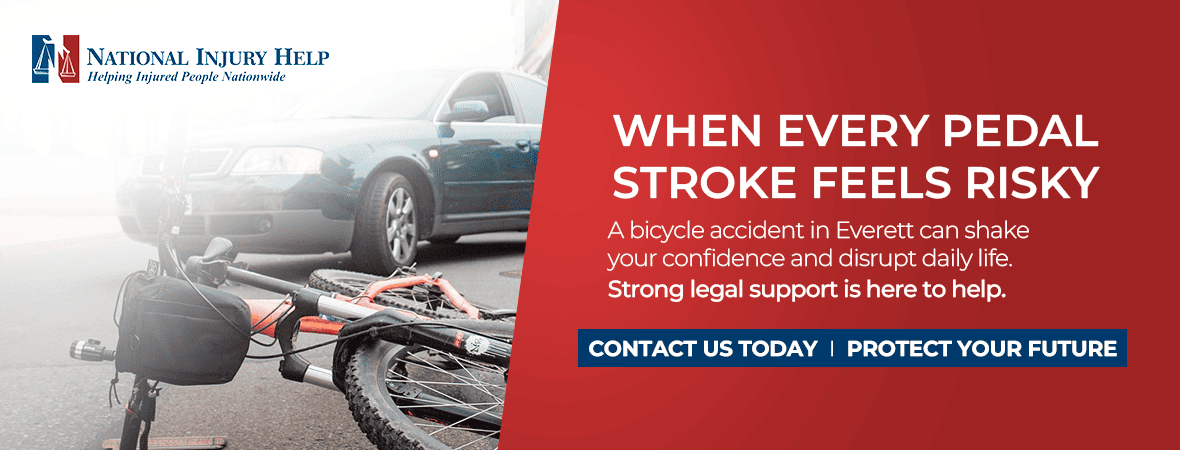
At National Injury Help, we connect injured cyclists with experienced legal professionals who provide free consultations at any hour. We focus on swift action to preserve crucial evidence and secure full compensation for our clients’ losses.
Common Causes of Bicycle Accidents in Everett
While every crash has unique circumstances, certain patterns emerge repeatedly: driver negligence, momentary lapses in attention, and dangerous road designs.
Distracted Driving
Driver distraction remains one of the leading threats to cyclists in Snohomish County. Motorists who text, adjust GPS systems, eat behind the wheel, or reach for objects create deadly hazards. Along high-traffic corridors like Evergreen Way and Broadway, a single moment of inattention can result in tragedy.
No Fee Guarantee: You pay nothing unless we win your case and secure compensation for you.
Call for a Free Consultation
Failure to Yield
Intersections and crosswalks near Colby Avenue, 41st Street, and Everett Station frequently experience collisions when drivers fail to yield to cyclists’ right-of-way. Right-turning motorists at red lights and those emerging from side streets often overlook cyclists in bike lanes or legally crossing intersections.
Speeding and Reckless Driving
High speeds create deadly scenarios for vulnerable road users. Along I-5 and SR-526 (Boeing Freeway), speeding drivers have minimal time to react when cyclists appear. Aggressive behaviors, such as tailgating, making abrupt lane changes, and running red lights, can increase crash risks.
Poor Road Conditions and Infrastructure
Hazards such as deteriorating pavement and inconsistent bike lane design are recognized risk factors for cyclist safety, and may contribute to crashes when riders encounter them. Potholes, debris, uneven surfaces, and faded markings pose unique threats to two-wheeled traffic. Municipal agencies may share liability when maintenance failures contribute to crashes.
Impaired Driving
Washington has comprehensive impaired-driving laws prohibiting the operation of a vehicle under the influence of alcohol or drugs. Despite this, traffic safety data shows that impaired driving remains a major contributing factor in serious and fatal crashes across the state.
This highlights ongoing concerns about roadway safety for all users, including cyclists. The results are often catastrophic when impaired motorists encounter vulnerable riders.
Recognizing these danger zones may help Everett residents push for better infrastructure, improved driver education, and stricter enforcement.
Frequent Injuries Resulting from Bicycle Accidents
When vehicles collide with cyclists, the physics are brutally unfair. Thousands of pounds of metal striking an unprotected human body creates devastating injuries with long-lasting consequences.
Head and Brain Injuries
Traumatic brain injuries rank among the most severe cycling crash outcomes. Helmets provide important protection but cannot prevent all brain trauma during high-force impacts or falls.
Severe cases may cause cognitive decline, memory problems, personality shifts, seizure disorders, and permanent disability requiring lifetime care. Even supposedly “mild” brain injuries can trigger persistent headaches, vertigo, focus difficulties, and emotional changes lasting months or years.
Spinal Cord Injuries
Vehicle impacts and hard falls can fracture vertebrae and damage the spinal cord, leading to:
- Paralysis: Complete spinal cord severing may cause total loss of movement below the injury site, resulting in paraplegia or quadriplegia.
- Incomplete Injuries: Partial spinal damage may preserve some function while still causing significant disability, chronic pain, and mobility restrictions.
Fractures and Bone Breaks
Bicycle collisions commonly produce broken bones, including:
Clavicle Fractures: Broken collarbones frequently occur when cyclists instinctively extend their arms during falls.
Arm and Wrist Fractures: Protective reflexes during falls often result in fractures of the forearm, wrist, and hand.
Leg Fractures: Direct vehicle strikes or falls can fracture the femur, tibia, fibula, and ankle bones.
Pelvis and Hip Fractures: Severe collisions can shatter pelvic and hip structures, requiring complex surgeries and lengthy rehabilitation.
Facial Fractures: Impacts with pavement or vehicles may break facial bones, including the jaw, cheekbones, eye sockets, and nasal bones.
Skin Abrasions and Soft Tissue Injuries
Pavement slides can cause road rash, resulting in serious skin abrasions that strip away multiple layers of tissue. Severe cases may require skin grafts and leave permanent scars, with infection risks demanding careful medical management.
Soft tissue damage includes torn muscles, sprained ligaments, and damaged tendons that often need surgical repair and extended recovery periods.
Internal Injuries
Blunt force trauma can rupture internal organs, creating life-threatening emergencies affecting the liver, spleen, kidneys, and lungs. These injuries may not produce immediate symptoms but can prove fatal without emergency intervention.
Dental Injuries
Crashes frequently cause dental trauma, such as knocked-out or fractured teeth and jaw injuries, requiring extensive dental work, implants, or reconstructive surgery.
Psychological Impact
Bicycle crash survivors commonly experience psychological trauma, including PTSD, anxiety disorders, depression, and fear of cycling or traffic. The emotional toll can equal or exceed physical injuries, affecting quality of life, relationships, and career prospects.
Insurance Coverage for Bicycle Accident Victims
After a bicycle crash, insurance often plays a central role in covering medical bills, lost income, and other related costs. In Washington, multiple types of insurance policies may apply depending on the circumstances of the collision, the parties involved, and the coverage carried by the cyclist and driver.
Liability Insurance
Washington mandates minimum liability coverage of $25,000 per person and $50,000 per accident for bodily harm, plus $10,000 for property damage. When negligent drivers cause crashes, their liability policy should compensate your injuries and losses. Unfortunately, these minimums rarely cover serious cycling injuries adequately.
Uninsured Motorist (UM) Coverage
This protection activates when hit-and-run drivers or uninsured motorists are involved in crashes. UM policy provides compensation up to its limits, offering crucial protection in Everett, where uninsured drivers remain a persistent problem.
Underinsured Motorist (UIM) Coverage
When at-fault drivers carry insufficient liability limits, UIM coverage bridges the gap. If your damages total $200,000 but the negligent driver carries only $25,000 coverage, UIM can provide additional compensation up to your policy limits.
Personal Injury Protection (PIP)
Washington auto policies typically include PIP, unless the owner rejects it in writing. PIP covers medical expenses and wage loss regardless of fault. Many cyclists are unaware that their auto insurance PIP coverage applies while cycling, although benefits may be exhausted quickly in severe cases.
Medical Payments Coverage
MedPay is optional coverage paying medical bills regardless of fault, similar to PIP but without wage replacement. It can provide quick payment for immediate medical needs while the victim’s injury claim is in progress.
Homeowners and Renters Insurance
Some property insurance policies include medical payment coverage that may apply to bicycle crashes. These policies might also provide liability coverage if you caused a crash while riding.
Health Insurance
A cyclist’s health plan may cover bicycle crash medical treatment, though insurers may seek reimbursement from your settlement through subrogation. Everett bicycle accident attorneys can negotiate reduced reimbursement, preserving more compensation for the injured.
Coordination of Benefits
Multiple policies may cover the victim’s bicycle crash. Attorneys help coordinate benefits, determine primary coverage sources, and maximize total recovery while managing insurer reimbursement demands.
Washington Bicycle Laws and Cyclist Rights
Washington law sets specific rules that define how cyclists and motorists are expected to share the road, as well as the rights and responsibilities that apply when a bicycle collision occurs. Understanding these statutes can help clarify how fault may be evaluated after a crash and what protections cyclists are afforded under state law.
Bicycles as Vehicles
Under Washington law, people riding bicycles on public roadways are generally granted the same rights and subject to the same duties as drivers of motor vehicles, as described in RCW 46.61.755. When bicyclists are on sidewalks or crosswalks, they have the same rights and responsibilities as pedestrians.
Separate provisions, such as RCW 46.61.770, allow cyclists to use a travel lane when safety considerations, like road hazards or preparing for a turn, make it unsafe to stay to the right.
Rights and Duties of Cyclists
Washington establishes clear bicycle operation rules:
Riding Position: Cyclists must ride as far to the right as is safe, except when passing, turning left, avoiding hazards, or when lanes are too narrow for safe vehicle passing.
Lighting Requirements: Bicycles need a white front light visible from 500 feet and a red rear reflector or light visible from 600 feet during nighttime riding.
Traffic Laws: Cyclists must follow traffic signals, stop signs, and all traffic controls exactly as motor vehicle operators must.
Motorist Duties Toward Cyclists
Washington law requires specific driver behaviors around cyclists:
Safe Passing Distance: Drivers must maintain a minimum clearance of at least three feet when passing bicycles (RCW 46.61.110). Violations causing crashes demonstrate clear negligence.
Yielding Right of Way: Drivers must yield to cyclists with right-of-way at intersections and crosswalks.
Dooring Prevention: Drivers and passengers must verify safety before opening doors to avoid interfering with cyclists or other traffic (RCW 46.61.620).
Damages Recoverable in Bicycle Accident Cases
Washington law permits comprehensive compensation for losses stemming from bicycle crashes caused by negligent drivers or dangerous road conditions.
Medical Expenses: Bicycle crash injuries typically require extensive treatment, including emergency response, hospital stays, surgical procedures, diagnostic imaging, medications, physical therapy, and continued rehabilitation.
Future Medical Expenses: Ongoing treatment needs, assistive equipment, or long-term care qualify for compensation. Medical specialists may testify about anticipated needs and associated costs.
Lost Income and Earning Capacity: Recovery time away from employment results in lost wages. Catastrophic injuries may prevent individuals from returning to their previous careers, reducing their lifetime earning capacity.
Pain and Suffering: Physical pain from injuries, surgical procedures, and chronic conditions merits compensation.
Property Damage: Victims can recover costs of repairing or replacing bicycles, equipment, and personal belongings damaged in crashes.
The Legal Process for Bicycle Accident Claims
Pursuing bicycle crash claims involves several stages that may require the help of an experienced Everett accident attorney.
Immediate Steps to Take After an Accident
Seek Medical Attention: Even seemingly minor injuries warrant prompt medical evaluation. Some serious conditions have delayed symptoms.
Report the Accident: Contact the Everett Police Department to create an official report. This generates key evidence, including fault assessments.
Document the Scene: Photograph the scene, bicycle damage, skid marks, and injuries. Collect witness contact information if possible.
Preserve Evidence: Retain damaged clothing, helmets, and equipment as potential evidence.
Avoid Insurance Statements: Don’t provide recorded statements to insurance companies before consulting an attorney.
Initial Consultation and Case Evaluation with an Everett Bicycle Accident Lawyer
Meeting with an experienced local attorney early protects your rights and preserves evidence. Attorneys assess circumstances, review medical documentation, identify liable parties, and explain legal options.
Investigation and Evidence Gathering in Bicycle Crash Cases
Everett injury attorneys can obtain police reports, interview witnesses, secure surveillance or traffic camera footage, analyze vehicle and bicycle damage, and consult specialists such as accident reconstructionists and medical professionals.
Identifying All Liable Parties
Bicycle crash cases often involve multiple defendants, including negligent drivers, vehicle owners, employers of commercial drivers, government entities responsible for dangerous roads, and manufacturers of defective bicycle or vehicle parts. Identifying all liable parties can help maximize available compensation.
Filing a Bicycle Accident Lawsuit
If settlement talks fail, attorneys file lawsuits in Snohomish County Superior Court. Washington’s three-year statute of limitations (RCW 4.16.080) requires most personal injury and property damage claims to be filed within three years of the crash. Missing this deadline can permanently eliminate recovery options.
Discovery Phase
Both sides exchange information through written questions, document requests, and depositions to develop their cases.
Mediation and Settlement Conferences
Washington courts frequently require mediation before trial. A neutral mediator facilitates potential settlement discussions. Even without formal mediation, negotiations often continue as evidence develops.
Trial Proceedings
If settlement proves impossible, the case advances to trial. Evidence, including accident reconstructions, medical documentation, and witness testimony, is presented. A judge or jury then determines liability and damages.
Appeals in Bicycle Accident Lawsuits
Either party may appeal, though appeals typically review legal errors rather than retry factual issues.
Safety Tips for Everett Cyclists
While no precautions guarantee protection from negligent drivers, Everett cyclists can minimize risks through smart safety practices, such as wearing a properly fitted helmet, using lights and reflective gear at night, obeying traffic signals, riding predictably and in visible positions, signaling turns, and staying alert to road hazards and parked cars.

Visibility is Critical
Maximize visibility to motorists, particularly during low-light conditions:
- Deploy bright white front lighting and red rear lighting as mandated by Washington law.
- Wear bright, reflective clothing and add reflective materials to the bike and helmet.
- Stay out of the driver’s blind spots, especially near large vehicles.
- Establish eye contact with drivers at intersections to confirm they’ve seen you.
Ride Predictably and Defensively
Erratic cycling can confuse drivers and increase crash risks. It’s essential to:
- Maintain a steady grip and avoid sudden movements.
- Clearly signal turns and lane changes using proper hand signals.
- Follow all traffic signals, stop signs, and lane markings.
- Position yourself where drivers expect to see vehicles, not hidden along the edges.
- Never assume drivers have seen you, and prepare for evasive maneuvers.
Maintain Your Bicycle
Equipment failures can cause crashes or prevent collision avoidance, so every cyclist must:
- Inspect tire pressure, brakes, and lights before each ride.
- Verify proper function of chains, gears, and other components.
- Replace worn tires, brake pads, and cables immediately.
- Keep the bicycle clean and properly maintained.
Wear Proper Safety Gear
While equipment won’t prevent crashes, it can reduce the severity of injuries.
- Always wear a properly fitted helmet meeting current safety standards.
- Replace helmets after any impact, even without visible damage.
- Wear gloves for hand protection during falls.
- Consider padded shorts and proper footwear for enhanced control.
Ride Appropriately for Conditions
Adapt your riding to weather and pavement conditions:
- Reduce speed on wet, icy, or debris-covered surfaces.
- Extend the following distances in rain when stopping distances increase.
- Enhance visibility during fog or heavy precipitation.
- Avoid riding during extreme weather when possible.
Document Your Rides
Leverage technology for protection:
- Bike cameras record crashes and provide vital evidence.
- GPS applications track routes and verify locations during incidents.
- Share your route with family or friends for safety monitoring.
Even the most cautious cyclists can be involved in crashes due to driver error or unsafe roadway conditions. If a collision occurs, it’s important to focus on documenting the circumstances, such as visibility issues, worn pavement markings, or blocked signs.
At National Injury Help, our network of Everett bicycle accident lawyers and partner law firms can help cyclists understand their options for reporting unsafe conditions and navigating insurance or municipal processes.
Frequently Asked Questions About Bicycle Accident Claims
Many cyclists and their families have questions after a crash. These FAQs address common concerns about safety, rights, and legal options in Everett.
1. What should I do immediately after a bicycle accident in Everett?
Get medical help right away. Contact police to report the crash, photograph the scene, and gather witness details. Keep damaged equipment and clothing as potential evidence. Avoid speaking with insurance adjusters before consulting an Everett personal injury lawyer.
2. How long do I have to file a bicycle accident claim in Washington?
You typically have three years from the date of the crash to file under RCW 4.16.080. Claims against government agencies require filing a notice within much shorter timeframes, so contact an attorney promptly.
3. What if I wasn’t wearing a helmet during the accident?
Washington state law mandates helmets in certain local jurisdictions but not statewide. Not wearing a helmet doesn’t prevent recovery, although it may slightly affect the damage if it contributes to head injuries.
4. Can I recover damages if I was partially at fault?
Yes. Washington applies a pure comparative negligence standard, meaning you can recover compensation even if partly at fault, though your fault percentage reduces your award.
5. What if the driver fled the scene?
Hit-and-run cases occur frequently, but you may still recover through your uninsured motorist (UM) coverage. Police investigations and area cameras can also help identify fleeing drivers.
6. How much is my bike accident case worth?
Value depends on the severity of the injury, medical expenses, income loss, long-term disability, and the degree of driver negligence. Severe or permanent injuries typically result in larger settlements.
7. What if I don’t have health insurance?
An attorney may help you access treatment on a lien basis, allowing you to receive care immediately and pay after your case is resolved.
8. Should I accept the insurance company’s first settlement offer?
No. Initial settlement offers typically fall far below fair value. Once you accept, you cannot seek additional compensation later.
9. What if the driver’s insurance isn’t enough to cover my losses?
You may pursue compensation through your underinsured motorist (UIM) coverage. Attorneys can also identify additional liable parties to expand recovery sources.
10. How long do bicycle accident cases take?
Timelines vary. Simple cases may resolve within months, while complex claims involving catastrophic injuries or multiple parties may take years.
11. What if my loved one died in a bicycle accident?
Surviving family members can pursue a wrongful death claim under Washington law to recover medical bills, funeral costs, and loss of support and companionship.
12. How do I find the best bicycle accident lawyer in Everett?
Look for attorneys experienced in bicycle crash cases, ideally with local knowledge of Everett and Snohomish County. Check client reviews, confirm their track record with similar cases, and schedule consultations to ensure they understand your needs and can guide you through the process.
Taking the Next Step Toward Recovery and Justice
Bicycle crashes cause devastating injuries and enduring hardship. When negligence causes those injuries, victims deserve justice, medical care, financial recovery, and accountability.
For Everett residents and visitors injured in bicycle crashes caused by careless drivers, dangerous roads, or defective equipment, National Injury Help offers guidance, advocacy, and a clear path toward recovery.
Our legal network offers free case evaluations 24/7 at 1-866-932-4817. Call today to speak with an experienced Everett bicycle accident lawyer.