










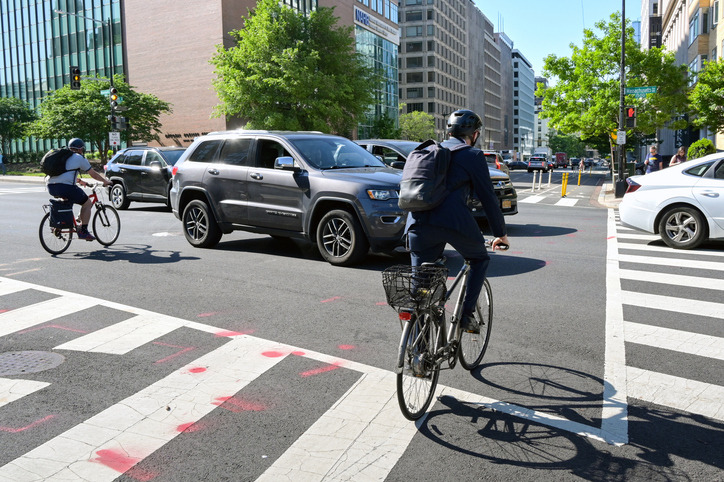
Pedestrians are often told they have the right-of-way. Yet after a serious collision, many injured pedestrians are shocked to learn that insurance companies still attempt to blame them for what happened. In California, this tactic is rooted in the state’s comparative negligence system, which allows fault to be divided between multiple parties, even when a driver clearly caused the crash.
Understanding how comparative negligence works, why pedestrians are frequently targeted for blame, and how liability is actually determined is critical for anyone injured while walking in California.
What Comparative Negligence Means Under California Law
California follows a pure comparative negligence system. This means an injured person can still recover compensation even if they are partially at fault for an incident. However, their financial recovery is reduced by the percentage of fault assigned to them.
In practical terms, this can significantly affect recovery. A claim involving extensive medical treatment, lost income, and long-term care may be reduced by tens or hundreds of thousands of dollars if the insurer succeeds in assigning even a small share of blame to the pedestrian. Because of this, insurance companies often focus less on whether the driver could have avoided the crash and more on identifying any pedestrian behavior they can attribute to fault.
This dynamic gives insurers a strong financial incentive to shift responsibility away from the driver, even in cases where the pedestrian’s actions played little or no meaningful role in causing the injury.
Why Pedestrians Are Commonly Blamed After a Crash
Insurance companies often treat pedestrian claims differently from vehicle-to-vehicle collisions. Because pedestrians are unprotected and injuries tend to be severe, claims are often costly. As a result, insurers aggressively search for ways to reduce payouts.
Common arguments used to blame pedestrians include:
- Claiming the pedestrian crossed outside a marked crosswalk.
- Arguing that the pedestrian entered the roadway suddenly.
- Suggesting distraction, such as phone use or headphones.
- Alleging the pedestrian ignored traffic signals.
- Asserting the pedestrian was impaired or not paying attention.
These arguments are frequently raised even when drivers were speeding, distracted, or failed to yield.
Right of Way Does Not Eliminate Driver Responsibility
One of the most damaging misconceptions in pedestrian cases is the belief that pedestrians must be completely faultless to recover compensation. California law does not support this idea.
Drivers are required to:
- Remain alert for pedestrians at all times.
- Yield when conditions require it, even outside of crosswalks.
- Adjust speed for visibility, lighting, and traffic conditions.
- Avoid distracted or inattentive driving.
A driver’s duty to exercise reasonable care does not disappear simply because a pedestrian may have made a mistake. In many cases, a driver could have avoided the collision entirely by slowing down, paying attention, or yielding appropriately.
How Comparative Negligence Is Used to Reduce Pedestrian Claims
Rather than denying claims outright, insurers often focus on assigning partial fault to pedestrians. Even a small percentage of blame can significantly reduce compensation in cases involving serious injuries.
These tactics may include:
- Selective use of surveillance or witness statements.
- Emphasizing pedestrian behavior while minimizing driver actions.
- Relying heavily on police reports that lack full context.
- Ignoring visibility issues, roadway design, or traffic flow.
Because pedestrians do not leave skid marks or vehicle data, insurers often assume they are easier targets for fault-shifting.
Evidence That Counters Pedestrian Blame
Successfully challenging comparative negligence claims requires detailed investigation and evidence that tells the full story of the crash.
Key evidence often includes:
- Traffic camera or surveillance footage.
- Witness statements from other pedestrians or drivers.
- Vehicle speed and braking data.
- Photos showing lighting, sightlines, and obstructions.
- Accident reconstruction analysis.
- Medical evidence demonstrating impact dynamics.
This evidence helps establish whether the driver had time to react, whether the pedestrian was visible, and whether the collision was avoidable.
The Long-Term Impact of Reduced Compensation
When insurers succeed in assigning partial fault, the consequences extend far beyond a single settlement number.
Reduced compensation can affect a victim’s ability to pay for:
- Ongoing medical treatment and rehabilitation.
- Future surgeries or long-term care.
- Lost income or reduced earning capacity.
- Pain, emotional distress, and diminished quality of life.
Because pedestrian injuries are often catastrophic, even small reductions can have lasting financial consequences.
How National Injury Help Protects Injured Pedestrians
At National Injury Help, our San Diego attorneys understand how aggressively insurers use comparative negligence to undermine pedestrian injury claims. We investigate the full circumstances of each collision, challenge unfair fault allocations, and build evidence-based cases that reflect what actually happened.
Our team works to secure compensation that accounts for both immediate injuries and long-term consequences, ensuring that partial-blame arguments do not unfairly limit a victim’s recovery.
If you were injured as a pedestrian in California and are being blamed for your own injuries, contact National Injury Help for a free consultation. Our San Diego County attorneys are ready to protect your rights and pursue the full compensation you deserve.
Note: The information provided in this article is based on reports from publicly available sources, including news outlets, police reports, and eyewitness accounts. National Injury Help has not independently verified all details of the reported incident. If you find any inaccurate or outdated information, please contact us, and we will review and update the content as appropriate. The photo used in this post is for illustrative purposes only and does not depict the actual scene of the incident.
Disclaimer: The content of this article is intended for informational purposes only and does not constitute legal advice or establish an attorney-client relationship with National Injury Help. For legal assistance specific to your case, we encourage you to contact a qualified attorney.
Related Posts
San Diego’s Freeway Trucking Hazards: How Negligence Leads...
San Diego’s freeway system serves as a vital connector between urban centers, coastal communities, and...
Are Priests and Churches Protected by statutes of...
In a growing national epidemic of clergy abuse highlighted by news headlines almost every day,...
Children and Dog Bites: Why they’re at Greater...
Dog bites are a serious concern, especially for young children. According to the Centers for...
Free Case Evaluation
Contact Us today for a FREE, Immediate Case Evaluation
Contact Us today for a FREE, Immediate Case Evaluation
Categories
Recent posts
- Shared Road Conflicts: How California’s Three-Foot Passing Law Plays Out in Bicycle Injury Claims
- Compensation Beyond Medical Bills: Emotional Trauma in California Dog Bite Cases
- Comparative Negligence in California: When Pedestrians Are Blamed for Their Own Injuries
- Phoenix, AZ – One Dead, One Injured in Two-Vehicle Crash at 35th Ave & Northern Ave
- Tucson, AZ – Injuries Reported in Crash at Stone Ave & Roger Rd
What Our Clients Say