






Don’t let a car accident define your future; Contact National Injury Help’s network of experienced attorneys today to secure the compensation you deserve.
Kirkland, located just east of Seattle, is a bustling hub that combines a thriving technology sector with a vibrant residential community. This unique blend results in significant vehicle traffic throughout the day, as morning commuters head to their corporate offices, commercial vehicles deliver goods, and shoppers flock to the area’s retail spaces. Unfortunately, this high volume of traffic can lead to accidents, particularly when drivers act carelessly or negligently.
For those injured in motor vehicle collisions in Kirkland, the aftermath can be daunting. Victims often face not only physical injuries but also emotional distress and financial burdens. They must seek qualified legal counsel to navigate the complexities of their situation. National Injury Help specializes in representing individuals who have suffered due to the negligence of others, allowing victims to pursue appropriate damages during their recovery period.
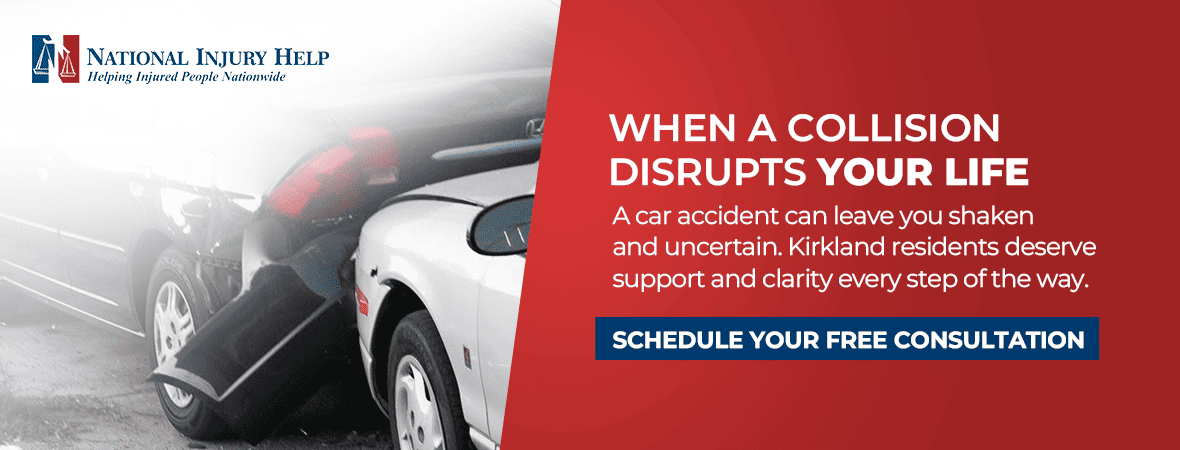
In Washington State, the Revised Code of Washington (RCW) Title 4 addresses civil procedures and actions, including tort actions for personal injury. This legal framework provides grounds for personal injury claims, allowing victims to seek compensation for their injuries. It is essential to understand the intricacies of these laws when preparing a case. Experienced attorneys are knowledgeable about state traffic regulations, local roadways, and insurance processes, ensuring that victims receive the support needed to protect their legal rights and obtain the compensation necessary for their recovery.
No Fee Guarantee: You pay nothing unless we win your case and secure compensation for you.
Call for a Free Consultation
Understanding Motor Vehicle Injury Claims
Motor vehicle injury claims represent legal procedures through which victims seek financial recovery for harm and losses stemming from another motorist’s carelessness. Washington law permits pursuing claims when irresponsible driving behavior results in bodily harm, vehicle destruction, income loss, or additional damages.
Frequent contributing factors to Kirkland collisions encompass:
- Operating vehicles while distracted through phone usage, texting, or consuming food
- Excessive speed and hostile driving behaviors
- Operating vehicles while intoxicated
- Disregarding traffic control devices
- Neglecting to grant the right-of-way
- Dangerous merging between lanes
- Maintaining an insufficient following distance
- Driving while exhausted or sleep-deprived
Washington operates under fault-based insurance principles, requiring the responsible party’s coverage to pay for damages. Additionally, the state applies comparative negligence standards, permitting recovery even when claimants share partial responsibility.
Eligibility for Filing Claims
Various parties may qualify to pursue claims following Kirkland traffic accidents:
- Injured Motorists: Those harmed due to another driver’s actions may seek compensation for bodily injuries and vehicle repairs.
- Vehicle Occupants: Passengers sustaining injuries can file against any negligent driver, independent of which vehicle they occupied during the collision.
- People on Foot: Individuals struck while walking retain the right to pursue damages.
- Bicycle Riders: Those injured while cycling due to motor vehicle contact can file claims for physical harm and equipment damage.
- Motorcycle Operators: Riders hurt in crashes involving automobiles or other vehicles may seek compensation.
- Related Individuals: When accidents prove fatal, designated relatives can pursue wrongful death actions.
Washington establishes a three-year limitation period from the collision date for filing personal injury litigation. Property damage claims receive the same three-year window. Delaying action weakens cases as physical evidence vanishes, witness recollections fade, and insurance carriers become less willing to cooperate.
Prevalent Accident Contributing Factors in Kirkland
Kirkland’s geographic position and road system generate particular hazard patterns:
- Rush Hour Density:
Functioning as both an employment hub and residential community with numerous tech firms and corporate facilities, Kirkland experiences substantial congestion during peak periods on Interstate 405, State Route 520, and surrounding streets. Impatient motorists often make dangerous choices that lead to crashes.
- Interstate 405 Traffic Issues:
This major highway passes through Kirkland, carrying continuous traffic volumes and experiencing regular collisions, particularly during commuting periods and inclement weather. The local segment encounters especially heavy use with numerous access points, creating merging complications.
- State Route 520 Problems:
This heavily utilized corridor linking Kirkland to Seattle across Lake Washington sees regular accidents, especially during commute windows and deteriorating weather. The toll collection zone and bridge approach areas present added dangers.
- Central Business District and Waterfront Congestion:
Downtown Kirkland’s confined streets, diagonal parking configurations, and significant pedestrian activity generate multiple collision risks. Major thoroughfares like Lake Washington Boulevard, Market Street, and Lake Street experience frequent incidents as drivers maneuver through crowded zones with restricted sightlines.
- Totem Lake Commercial Zone:
This shopping and dining district produces considerable traffic with numerous retail centers, eateries, and commercial establishments concentrated within a compact area. Complicated junctions and frequent turning actions lead to regular accidents.
- Corporate Campus Traffic Patterns:
Large technology employers create traffic spikes during shift transitions and midday breaks. Hurried workers traveling to and from employment add to accident likelihood in adjacent areas.
- Challenging Junctions:
High-volume intersections, including NE 85th Street at Lake Washington Boulevard, Totem Lake Boulevard at 124th Avenue NE, or Central Way at Market Street, witness frequent collisions due to heavy traffic and turning movements. National Injury Help’s legal team understands these dangerous locations and proper investigation methods.
- Climate Factors:
Regional rainfall remains a persistent element. Moisture-covered pavement decreases grip and visibility, causing numerous yearly accidents. Kirkland’s sloped geography creates extra difficulties during wet or frozen conditions.
- Inattentive Operation:
Similar to other locations, driver distraction ranks as a primary accident cause. Motorists checking devices, programming navigation systems, or eating cause avoidable crashes daily.

Available Compensation Categories
Washington statutes permit pursuing recovery for multiple loss types:
Economic Damages: Calculable Losses
- Healthcare costs, including emergency treatment, hospitalization, surgical procedures, rehabilitation, and prescriptions
- Income loss and diminished earning potential
- Vehicle repair or replacement expenses
- Additional out-of-pocket costs
Non-Economic: Intangible Damages
- Physical pain and suffering
- Psychological trauma
- Reduced quality of life
- Lasting impairment or scarring
- Relationship harm for spouses
Fatal Accident Compensation:
- Interment and memorial service costs
- Loss of economic support
- Loss of relationship and counsel
- Pre-death medical bills
Washington doesn’t impose damage caps in most collision cases, permitting complete compensation for losses. National Injury Help attorneys collaborate with healthcare professionals and financial analysts to determine proper claim valuations.
Post-Accident Action Steps for Kirkland Collisions
Taking appropriate measures immediately following a traffic accident significantly impacts health, security, and future claim prospects. Following crashes, confusion and stress hormones frequently conceal injuries and impair decision-making. Adhering to a systematic approach helps safeguard both health and legal interests.
1. Prioritize Safety
Initial focus should address safety. Relocate your vehicle to a protected area when feasible, such as the road shoulder or adjacent parking zone, and activate hazard signals to warn approaching traffic. For crashes on busy routes like Lake Washington Boulevard, Central Way, or Interstate 405, avoid standing near moving vehicles. Verify passenger and other party conditions, but refrain from moving seriously injured individuals unless immediate threats like flames or traffic exist.
2. Contact Emergency Services
Always report collisions. Reach the Kirkland Police Department for city-boundary incidents, or Washington State Patrol for crashes on Interstate 405, State Route 520, or major highways. Request medical response if anyone experiences pain or injury. Official law enforcement documentation proves critical, recording time, location, conditions, and involved parties, establishing groundwork for insurance and legal proceedings.
3. Obtain Medical Evaluation
Even without apparent symptoms, a healthcare evaluation remains essential. Certain injuries, including concussions, internal hemorrhaging, or soft tissue damage, may manifest hours or days afterward. Visit medical providers or emergency facilities. Complete all recommended examinations and treatments; medical documentation provides vital claim evidence.
4. Record Comprehensive Information
Before departing the scene when safe, capture detailed photographs of vehicles, registration plates, damage, tire marks, scattered debris, road surface conditions, and visible injuries. Document surroundings, including traffic controls, posted signs, and weather, which help explain accident circumstances. Collect information from all drivers, passengers, and observers, including complete names, contact numbers, insurance information, and license details. When police respond, record the attending officer’s identification information.
5. Avoid Responsibility Statements
Natural feelings of regret or shock following crashes shouldn’t lead to apologies or speculation about fault. Casual remarks can subsequently be interpreted as fault admissions. Maintain courtesy, supply accurate details to law enforcement, and allow official investigation to establish liability.
6. Notify Your Insurance Provider
Inform your carrier about the collision promptly, but refrain from providing extensive or recorded statements before consulting legal counsel. Insurance entities frequently attempt to minimize payments or assign blame early in proceedings. Provide only essential facts until securing legal representation.
7. Consult National Injury Help
Before executing documents or accepting settlement proposals, seek guidance from a qualified Kirkland car accident attorney. Local lawyers understand Washington regulations, regional courts, and insurer strategies. They guide you through procedures, maintain evidence, and prevent accepting inadequate compensation. Earlier consultation allows for more effective rights protection.
Critical Errors to Prevent
Making missteps during crucial processes leads to expensive complications and postponements. Recognizing typical pitfalls and understanding avoidance methods significantly improves success likelihood. Common mistakes include:
- Delaying medical care or missing follow-up appointments
- Publishing crash or injury information on social platforms
- Fixing or discarding damaged property before documentation
- Providing recorded statements to insurance companies without legal counsel
- Accepting inadequate settlements before complete injury assessment
Preventing these errors preserves evidence and enhances recovery outcomes.
Contingency Fee Arrangements Explained
Most legal representatives operate on contingency arrangements. Clients pay no legal fees absent recovery. The fee constitutes a percentage of the settlement or court award. Case expenses for professional witnesses, documentation, and depositions typically receive advancement with reimbursement upon recovery conclusion. Your representation agreement clarifies specifics.
Frequently Addressed Questions
- What timeframe exists for filing claims in Washington?
Washington law provides three years from your collision date for filing personal injury actions. While this seems generous, waiting substantially weakens cases. Physical evidence degrades, video recordings get deleted, and witness memories deteriorate. Prompt action strengthens claims. Contact National Injury Help immediately for rights protection.
- How does Washington’s comparative negligence system function?
Washington implements pure comparative negligence principles. This permits recovering compensation despite bearing partial accident responsibility. For example, with 25% fault attribution, you could recover 75% of total damages. Skilled attorneys ensure insurance companies don’t exaggerate your fault percentage to diminish their payment obligations.
- What happens when the other motorist lacks insurance?
When responsible drivers are uninsured or underinsured, you can file under your Uninsured/Underinsured Motorist coverage if your policy contains it. National Injury Help’s lawyers can investigate additional recovery sources, including the driver’s employer for work-related incidents or manufacturers if defective components contributed.
- What are attorney hiring costs?
Most Kirkland collision attorneys work on a contingency basis, requiring no upfront payment. Attorneys receive payment only upon winning cases, taking settlement or verdict percentages. This structure ensures lawyers are motivated toward maximizing compensation.
- Should I accept initial insurance offers?
No. First settlement proposals almost always fall significantly below actual case values. Insurance adjusters receive training in minimizing payments, especially before complete injury knowledge emerges. Attorneys can evaluate a valid claim’s worth and negotiate appropriate compensation.
- What if I were injured as a passenger?
Passengers generally hold strong claims since they rarely bear fault. You can file against any negligent driver involved, whether operating your vehicle or another car. Your attorney manages the process and helps avoid conflicts with friends or relatives who were driving.
- Can I recover damages without wearing a seatbelt?
Yes, though complications may arise. Washington law mandates seatbelt usage, and insurers may contend injuries worsened due to non-use. However, seatbelt non-use doesn’t eliminate compensation rights. It may only reduce recovery proportionally. Your lawyer can challenge these arguments and demonstrate the other driver’s negligence as the primary causation.
- What if the other driver fled?
As a hit-and-run victim in Kirkland, report immediately to the Kirkland Police Department or Washington State Patrol. Then file under your uninsured motorist coverage if available. Even without locating the other driver, your insurer may still compensate for losses.
- Do I need a medical evaluation without symptoms?
Absolutely. Collision injuries like concussions, soft tissue harm, or internal bleeding frequently require hours or days before symptoms appear. Obtain immediate evaluation and maintain all medical documentation. This protects health while strengthening cases by documenting injuries promptly.
- What damages are recoverable after collisions? You may qualify for compensation, including:
- Medical costs: Emergency services, hospital stays, rehabilitation, and ongoing treatment
- Income losses: Including diminished earning ability
- Physical and emotional suffering: Both types of distress
- Vehicle damage: Repair or replacement costs
- Reduced life enjoyment: When injuries affect regular activities or independence
Each case differs. Your attorney can calculate appropriate values based on specific circumstances.
- Must I attend court?
Not necessarily. Most collision cases resolve through negotiation or mediation before trial. However, when insurance companies refuse appropriate compensation, your attorney will be ready to litigate and fight for deserved outcomes.
- What if road conditions caused the accident?
When hazardous road conditions contributed to crashes, you may have claims against responsible city, county, or state entities for maintenance failures. Government claims in Washington have shorter filing deadlines, sometimes only 60 days, so don’t delay seeking legal guidance.
- How long do car accident cases take to settle?
Simple property-only claims may resolve within weeks, but injury cases can require several months to over a year, depending on injury severity, treatment duration, and negotiation timelines. Your attorney will balance speed with ensuring complete damage documentation before settling.
- What should I bring to attorney consultations? To maximize initial meetings, bring:
- Police reports or case numbers
- Scene photographs or videos
- Medical billing and treatment documentation
- Insurance policies and claim correspondence
- Income documentation or lost wage records
Having this information ready helps lawyers evaluate cases and begin protecting rights immediately.
- Can I manage my claim without a lawyer?
You can, but it’s rarely recommended, especially with injuries involved. Insurance adjusters excel at minimizing claims, and Washington’s comparative negligence rules can reduce payouts. Experienced attorneys level the playing field and ensure compensation for the complete damage scope, not just what insurers offer.
Obtain Deserved Legal Assistance
Traffic accidents disrupt lives. Physical harm, financial pressure, and insurance company dealings can feel overwhelming. You don’t have to face this alone.
Skilled Kirkland collision attorneys fight for your rights while you concentrate on recovery. They manage insurance negotiations, collect evidence, calculate complete damages, and pursue maximum compensation through settlement or litigation.
Don’t settle for less than deserved. If you or someone you care about sustained injuries in a car accident, contact National Injury Help today. Call 1-866-932-4817 or schedule a free consultation online. Free consultation. No fees unless you win. Get the compensation and justice you deserve; your recovery starts now.