


5 Scott
 Scott

Richard
Nov 24, 2026
Hotel and motel sex trafficking can leave survivors facing difficult questions about what happened and what comes next. Sex trafficking lawyers at National Injury Help represent survivors across the U.S. and can help you understand your rights and legal options.











The effects of sex trafficking can last long after you leave a hotel or motel. Hotel sex trafficking occurs when traffickers use lodging properties to facilitate commercial sexual exploitation. If you or a loved one has experienced trafficking or exploitation, understanding your rights can help you make informed decisions about your legal options.
If a hotel, motel, or related entity played a role in the circumstances that allowed the trafficking to occur, potential liability depends on the facts of the case, the conduct or knowledge of the parties involved, and the laws that apply. Federal law may also allow survivors to pursue civil remedies when specific legal requirements are met. A hotel sex trafficking lawyer can review the circumstances, identify potential claims, and help survivors understand their options.
Traffickers may use hotels, motels, short-term rentals, and other lodging services to facilitate commercial sexual exploitation. A room can provide a temporary location where traffickers control or exploit a survivor while limiting contact with people outside the situation. Traffickers may also move survivors between properties, making it harder to recognize patterns or intervene.
Sex trafficking can affect people in different circumstances:
Traffickers may use threats, manipulation, deception, or control over basic needs to maintain control over an adult.
Federal law does not require proof of force, fraud, or coercion when the person involved in commercial sex is a minor.
Repeatedly changing hotels or motels can make the conduct less visible and create additional challenges when investigating what happened.
The surrounding circumstances matter, including how the person was controlled, what the property or its employees knew or observed, and how they responded to potential warning signs.
The presence of commercial sex at a hotel or motel does not, by itself, establish sex trafficking or make the property legally responsible. For survivors considering sexual abuse claims or other abuse claims, an attorney can review the specific circumstances and applicable law to determine what legal options may be available.
The fact that trafficking occurred at a hotel does not automatically make the property or its owners legally responsible. Liability depends on the evidence, the parties involved, and the legal claims that apply. Under federal law, survivors may bring certain civil claims against parties that knowingly benefited from participation in a trafficking venture when the statutory requirements are met.
A property owner or operator may become a defendant when evidence connects its conduct, knowledge, or benefit to the alleged trafficking venture. An investigation may examine:
These factors do not establish liability on their own. The specific facts and applicable law determine whether a survivor can pursue a claim against an owner or operator.
Hotel brands and the businesses operating individual properties may have different legal roles. A franchisor owns or licenses the brand and may provide systems, standards, or oversight. A franchisee operates a particular location under that brand. The property owner and day-to-day operator may be separate entities as well.
Depending on the evidence, a survivor may pursue claims involving multiple related entities. Courts have reached different conclusions in hotel trafficking cases based on allegations involving control, participation, knowledge, financial benefit, and the relationship between franchisors and franchisees.
Federal law can provide an important path for survivors pursuing civil claims related to sex trafficking. However, other legal claims may also apply depending on the circumstances and where the alleged trafficking occurred.
The Trafficking Victims Protection Reauthorization Act (TVPRA) is part of the federal framework addressing human trafficking and provides an important avenue for certain survivors seeking civil remedies. Under 18 U.S.C. § 1595, a victim of a qualifying violation may bring a civil action against the perpetrator. The statute also allows claims against certain parties that knowingly benefit from participating in a trafficking venture that they knew or should have known involved a violation.
The federal civil remedy does not mean every hotel trafficking case automatically qualifies. The specific conduct, evidence, defendants, and statutory requirements must be evaluated before determining whether a claim can proceed under the TVPRA.
The current federal statute generally requires an action under § 1595 to be filed within the later of 10 years after the cause of action arose or, for a victim who was a minor when the alleged offense occurred, 10 years after the victim reaches age 18.
A survivor’s legal options may extend beyond a federal trafficking claim. Depending on the circumstances, a case may also involve:
The available claims depend on the circumstances, the parties involved, and the laws governing the case. An attorney can evaluate the complete legal picture rather than assuming that one federal claim applies.
Scott
I talked to Scott wilkie
 Scott did an awesome job, very friendly and excellent with bedside manners .
 This guy is hands down, the best in town.
 I talk to Scott
 Scott Wilkie was a pleasure to speak with, made me feel like I mattered and seemed to genuinely care.
 Huge shoutout to Scott Wilkie! Dealing with lawsuit details can be incredibly overwhelming, but Scott acted as the perfect middleman to help me navigate it all. He was so nice, patient, and explained everything clearly from start to finish. If you ever need someone who can bring total clarity to a complex situation while genuinely caring about your peace of mind, Scott is your guy. Thank you so much for all your help!
 I really enjoyed talking with Scott and he answered and explained the steps and process we will be going through. It was a pleasure meeting him and lfeel safe and in good hands all the way around. I how he treated me with compassion through my issues regarding Kratom it's nice knowing and feeling his concern and compassion with what kratom 7 hydroxy has done to many. Thank you again and I know I'm in good hands clarisse Korum
 I talked to Scott in regards to my case and he was very and I do mean very very professional and courteous and respectful and helpful super helpful he was and patient with me and that means alot and goes along way giving I have learning and mental health disabilities and a speech impediment problem when talking which like I said his patience and kindness was amazing
 Scott contacted me right away about my Essure injury. I felt like I mattered for the first time. I can't predict anything, moving forward, but I can say that I am so grateful for that call. It seemed like no one else ever cared! Thank you, Scott!
 Scott was a huge help with this process. He fully explained every question I had. As well as very informative about suboxone and 7-OH
 Scott assisted my husband & I in filing my claim. He was professional & easy to talk to.
 Scott helped me with my hotel/motel case and he was super pleasant and friendly.
 Very thoughtful and mindful of the details of the case! Scott Wilkie took great care with me!
 Scott was a big help hotel case
 This is Tanna Tedford I give Scott Willie a fantastic job at being patient and understanding.
 Wonderful very understanding
 Scott helped with my hotel case & was a pleasure to deal with.
 Phil. Jackson was very helpful. I appreciate everything he did for me and my son. He was very patient and helped me walk through everything. I appreciate it. Thank you.

The deadline for filing a hotel trafficking lawsuit depends on the legal claims involved, where the alleged conduct occurred, and the circumstances of the case. Federal and state statutes of limitations may apply, and different claims can have different deadlines.
For a claim brought under the federal Trafficking Victims Protection Reauthorization Act (TVPRA), 18 U.S.C. § 1595 currently provides that the action generally must be filed by the later of 10 years after the cause of action arose or, if the survivor was a minor when the alleged offense occurred, 10 years after the survivor turns 18.
That federal deadline does not apply automatically to every potential claim. State trafficking laws, negligence claims, premises liability claims, and other causes of action may have different filing requirements.
Prompt legal evaluation can also help preserve evidence. Hotel surveillance footage, reservation records, employee communications, complaints, and witness memories may become more difficult to obtain as time passes. Speaking with a sexual abuse attorney sooner rather than later can help identify applicable deadlines and determine which legal options may be available.
The damages available in a hotel trafficking lawsuit depend on the applicable law, the facts of the case, and the losses a survivor can establish. Potentially recoverable damages may include:
In some cases, the law may also allow punitive or enhanced damages. These forms of damages depend on the applicable legal standards and circumstances and should not be treated as guaranteed.
There is no standard settlement amount for sexual abuse claims involving hotels or motels. The value of an individual case cannot be determined from the type of claim alone. An attorney must review the circumstances, evidence, applicable laws, and documented losses before assessing potential legal remedies.
For survivors considering an abuse claim, a case review can help clarify what damages may potentially be available and what evidence may support the claim.
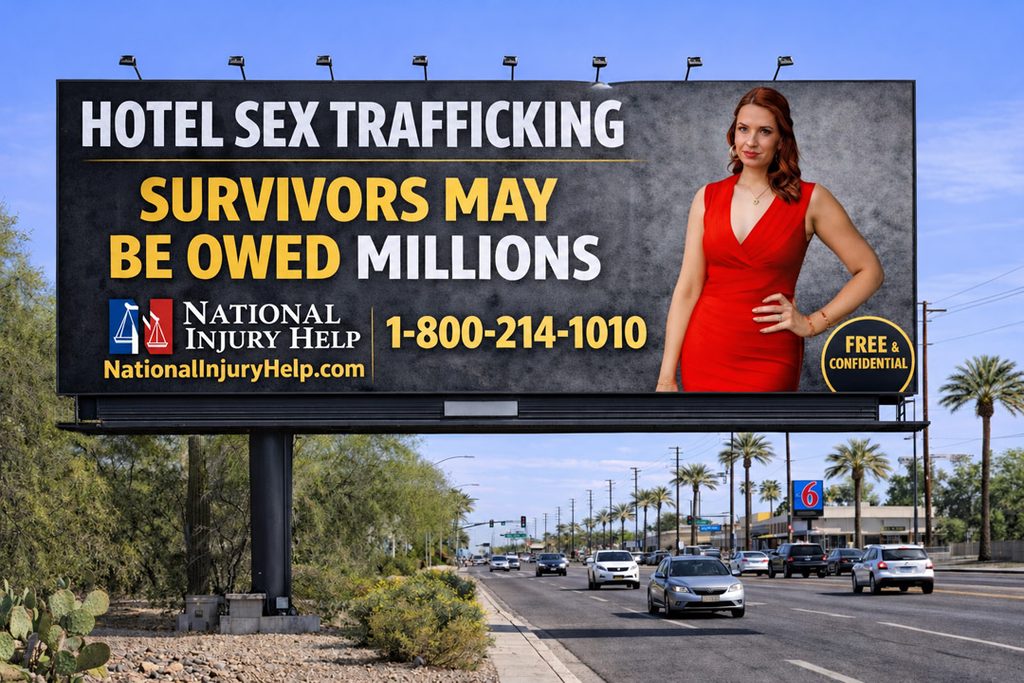
Survivors have filed trafficking-related lawsuits involving individual properties operating under major hotel and motel brands across the U.S. These cases can involve budget motels, extended-stay properties, and large national hotel chains. Court records show that claims have named both property-level businesses and corporate or franchisor entities.
Being named in a lawsuit is an allegation, not a finding of wrongdoing or liability. Courts have reached different outcomes depending on the facts and the claims against each defendant.
The following brands have been publicly named in trafficking-related litigation or allegations:
This list is not exhaustive. Survivors have also brought claims against independent motels and lodging businesses without a national brand affiliation. The relationship between the brand, franchisor, franchisee, property owner, operator, and management company can matter when determining which entities may be named in a lawsuit.
Don’t see the hotel or motel involved in your situation? You can still request a case review to discuss your potential legal options.
Taking legal action after sex trafficking can feel overwhelming, especially when multiple businesses or individuals may be involved. National Injury Help helps survivors understand their rights and evaluate potential legal claims involving hotels, motels, and related entities. A hotel sex trafficking lawyer can investigate what happened, identify potentially responsible parties, and explain the legal process.
Every case requires a careful review of the specific facts, available evidence, and applicable laws. NIH can help survivors understand their potential legal options without making assumptions about liability or the outcome of a claim.
NIH reviews the circumstances surrounding the alleged trafficking, including the lodging property involved, its ownership and management structure, and available records. Attorneys may investigate:
Attorneys may also help identify and preserve relevant evidence before it becomes more difficult to obtain. Which parties may be legally responsible depends on the facts of the case and the requirements of the applicable law.
After reviewing the available information, NIH can help survivors evaluate potential legal options and prepare claims when appropriate. Attorneys can handle communications with opposing parties and advocate for survivors throughout the legal process.
Trafficking-related cases involve deeply sensitive circumstances. Trauma-informed legal representation can give survivors a more supportive environment for discussing their experiences and making decisions about their case. An attorney can also explain potential outcomes, anticipated timelines, and next steps based on the individual circumstances rather than making assumptions about what a case may be worth or how it will end.
NIH handles qualifying cases on a contingency basis, meaning there is no attorney fee unless the case recovers compensation. Federal law may also allow a successful plaintiff to recover reasonable attorney fees from a defendant in qualifying civil trafficking actions.
The initial case review is free and confidential, giving survivors an opportunity to discuss what happened and learn about potential legal options without an upfront fee.
Sex trafficking involves commercial sex obtained through force, fraud, or coercion. Federal law also considers a minor involved in commercial sex a victim of sex trafficking, regardless of whether force, fraud, or coercion was used. Traffickers may use hotels, motels, and other lodging properties to facilitate exploitation.
You may have legal options if you experienced harassment, abuse, or trafficking at a hotel. However, harassment alone does not automatically establish that a hotel is legally responsible. An attorney can review what happened, the hotel’s involvement, applicable laws, and available evidence to determine whether you may have a claim.
The evidence needed depends on the circumstances and the legal claim. Evidence may include communications, witness statements, hotel records, complaints, surveillance footage, and other documentation. For adult trafficking under federal law, force, fraud, or coercion may be relevant. Cases involving minors have different federal requirements.
You may be able to pursue a claim against a motel if the facts and applicable law support legal liability. The potential defendants may include the property owner, operator, franchisee, franchisor, or other entities. An attorney can review the circumstances and evidence to determine what legal options may be available.
Potential defendants can include traffickers and, when legal requirements are met, certain businesses or individuals connected to the trafficking venture. Depending on the circumstances, a lawsuit may involve a hotel owner, operator, franchisee, franchisor, or management company. The appropriate defendants depend on the evidence and applicable law.
A survivor may be able to file a hotel sex trafficking claim when the facts and applicable legal requirements support a cause of action. The specific requirements depend on the claim and jurisdiction. Survivors who were minors at the time of the alleged trafficking may be subject to different federal filing rules.
Hotels may train employees to recognize potential warning signs, follow reporting procedures, and respond appropriately to suspected trafficking. Training can cover concerning guest behavior, room activity, or situations involving potential exploitation. Specific training practices vary by hotel, company policies, and applicable laws.