








Take action now: contact our experienced Redmond pedestrian accident lawyers for a free consultation and protect your rights.
Introduction: Protecting Pedestrians in Redmond
- High-traffic intersections and busy corridors create significant pedestrian risks in Redmond.
- Victims face serious injuries, mounting medical bills, and complex insurance challenges.
Pedestrian crashes occur with alarming frequency in Redmond, particularly at high-traffic intersections like Redmond Way & 148th Ave NE and in areas surrounding Marymoor Park. King County data shows pedestrian injuries continue to rise, especially during morning and evening commutes when distracted drivers rush through crosswalks and intersections.
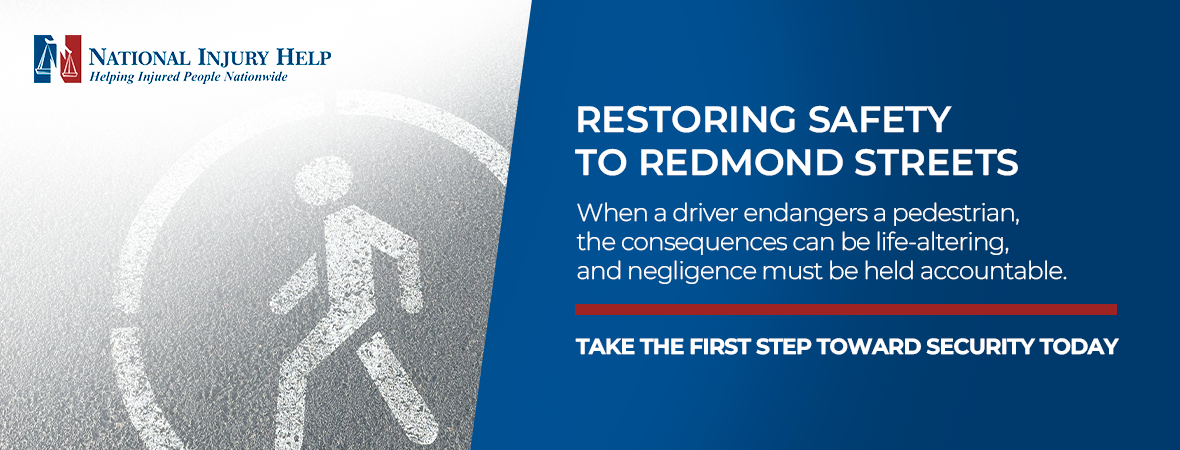
These collisions produce devastating consequences. Unlike vehicle occupants protected by airbags and safety features, pedestrians absorb the full force of impact. Even low-speed crashes can cause traumatic brain injuries, spinal damage, and broken bones that require extensive medical treatment and lengthy rehabilitation.
No Fee Guarantee: You pay nothing unless we win your case and secure compensation for you.
Call for a Free Consultation
Local Community Context
Redmond’s unique combination as a suburban community and a central tech hub presents specific challenges for pedestrians. In the downtown area surrounding Redmond Town Center, there is a significant amount of foot traffic, which often mixes with vehicles navigating parking lots and side streets. Additionally, Microsoft’s expansive campus brings thousands of workers who frequently walk between buildings and cross streets along SR-520. Families visiting Marymoor Park must also cross the busy Redmond-Fall City Road to access the park’s trails.
Specific corridors warrant particular caution. Avondale Road carries significant traffic volumes with limited pedestrian infrastructure. Bear Creek Parkway’s wide lanes encourage higher speeds that reduce driver reaction time. Understanding where accidents cluster helps identify whether inadequate signage, poor lighting, or other infrastructure failures contributed to crashes.
Role of Legal Support
Insurance adjusters contact victims quickly after accidents, often while they’re still in the hospital. These conversations seem friendly but serve a calculated purpose: gathering information to reduce what the insurance company must pay. Recorded statements, early settlement offers, and seemingly innocent questions become tools to minimize payouts.
Professional legal guidance can help balance the uneven playing field in accident cases. Experienced attorneys manage all communications with insurance companies to avoid any statements that could harm your case. They thoroughly document your injuries, linking your medical treatment directly to the accident, and they assess the full extent of your damages. This includes future treatment costs, loss of earning capacity, and non-economic losses.
Common Causes of Pedestrian Accidents
- Negligent driving, such as distracted driving, speeding, and failing to yield, is responsible for the majority of pedestrian accidents.
- Environmental factors such as poor lighting, defective sidewalks, and inadequate signage contribute significantly.
Driver Negligence
Distracted driving tops the list of causes for pedestrian accidents in Redmond. Drivers checking phones at red lights often accelerate without noticing pedestrians still in the crosswalk. Those following GPS directions while navigating downtown streets miss seeing people crossing between parked cars.
The problem intensifies on major corridors like Redmond Way and SR-202, where traffic moves quickly. Drivers approaching intersections at 40 or 45 mph have minimal time to stop if someone enters a crosswalk unexpectedly. These high-speed impacts produce the most severe injuries.
Failure to yield represents another major cause. Left-turning drivers focus on oncoming traffic while ignoring pedestrians crossing the street they’re turning onto. At the complex intersection near Redmond Town Center, where multiple lanes converge, drivers making permitted turns frequently cut across crosswalks while pedestrians have the walk signal.
Environmental Factors
Infrastructure failures contribute to many accidents in ways that implicate property owners and municipal authorities. Crumbling sidewalks along older stretches of Avondale Road force pedestrians to walk in the street. Overgrown vegetation at corner intersections blocks sightlines, preventing both drivers and pedestrians from seeing each other until they’re dangerously close.
Lighting deficiencies are especially hazardous during Redmond’s dark winter months. Poorly lit crosswalks near transit stops along SR-520 make pedestrians nearly invisible to oncoming drivers. When accidents happen in these areas, reviewing maintenance records and prior complaints can help determine if inadequate upkeep contributed to the incidents.
Construction zones around Redmond’s constant development projects create temporary but significant hazards. Blocked sidewalks force pedestrians into traffic lanes. Confusing detour signs leave both drivers and pedestrians uncertain about right-of-way.
Pedestrian Behavior
While most pedestrian accidents result primarily from driver negligence or environmental hazards, pedestrian actions sometimes play a role. Crossing mid-block between parked cars reduces visibility. Walking against traffic signals creates unexpected conflicts.
However, even when pedestrians contribute to accidents, drivers usually bear primary responsibility. Washington law requires drivers to exercise due care to avoid striking pedestrians regardless of where crossing occurs. RCW 4.22.005 ensures pedestrians can recover compensation even when partially at fault. Skilled legal representation presents evidence minimizing pedestrian fault while highlighting driver negligence to maximize recovery.
Typical Injuries from Pedestrian Accidents
- Pedestrian crashes produce severe injuries due to the unprotected nature of the human body against vehicle impacts.
- Even “minor” accidents can cause injuries with long-lasting consequences.
Severe Injuries
Traumatic brain injuries (TBI) rank among the most serious consequences of pedestrian accidents consequences. When heads strike windshields or pavement, the brain impacts the inside of the skull, causing bruising, bleeding, or swelling. Severe TBIs produce cognitive impairments affecting memory, concentration, and personality. Some victims never regain their previous level of function, requiring assisted living arrangements or full-time care.
Spinal cord injuries produce similarly devastating outcomes. Damage to the cervical spine can cause quadriplegia, while lower injuries may result in paraplegia. Even incomplete spinal cord injuries often leave victims with chronic pain and mobility limitations. Medical costs for spinal cord injuries frequently exceed millions of dollars over a lifetime.
Common Injuries
Broken arms, wrists, ankles, or ribs require casting, sometimes surgery, and always extended healing periods. Victims cannot work during recovery, losing income precisely when medical expenses mount. Fractures may heal imperfectly, leaving victims with a reduced range of motion or chronic pain.
Soft tissue injuries, torn ligaments, muscle damage, and tendon injuries often prove more debilitating than broken bones. These injuries may not show on X-rays immediately, leading insurance adjusters to question their severity. Yet victims face months of physical therapy and persistent pain.
Financial and Emotional Impact
Emergency room treatment, hospital stays, surgeries, and initial specialist visits generate bills totaling tens or hundreds of thousands of dollars. Lost wages compound the problem as broken bones and rehabilitation periods prevent working for weeks or months. This financial pressure often pushes victims toward accepting inadequate insurance settlements.
Many pedestrian accident victims develop anxiety about crossing streets or being near traffic. Some experience post-traumatic stress disorder with flashbacks and nightmares. Depression commonly follows when injuries prevent returning to work or participating in hobbies.
Who Can Be Held Liable
- Multiple parties often share responsibility for pedestrian accidents.
- Washington’s comparative fault system allows recovery from all negligent parties.
Motorist Liability
Traffic violations, speeding, running red lights, and failing to yield clearly establish liability when they cause crashes. Police reports documenting these violations provide strong evidence. Driver distraction creates liability even without specific traffic violations. Cell phone records obtained through litigation can prove a driver was using their phone at the accident moment of the accident.
Commercial drivers operating delivery vans, rideshare vehicles, or trucks bring additional liable parties into cases. Employers bear vicarious liability for employees acting within their job scope. These corporate policies often provide larger coverage amounts than individual drivers carry.
Third-Party Liability
Commercial property owners around Redmond Town Center must maintain safe parking lot conditions and adequate lighting for pedestrians. Restaurants and shops have duties to keep adjacent sidewalks clear of debris, ice, or standing water. When failures in these duties contribute to accidents, property owners share liability.
Municipal liability refers to the responsibility of the City of Redmond or the Washington State Department of Transportation for any defects in public infrastructure. Issues such as faded crosswalk markings, malfunctioning traffic signals, or missing signage can create dangerous conditions for citizens. To file a claim against government entities, it is essential to strictly adhere to the notice requirements outlined in RCW 4.92 and RCW 4.96, which typically dictate that notice must be given within 60 to 120 days.
Shared Responsibility
Washington’s pure comparative fault system (RCW 4.22.005) allows injured pedestrians to recover damages even when partially responsible for accidents. A pedestrian found 30% at fault can still recover 70% of the total damages from a driver who was speeding and texting.
Insurance companies aggressively pursue comparative fault arguments to reduce payouts. Effective legal strategy counters these tactics by thoroughly documenting driver negligence and environmental factors. By building comprehensive cases, skilled representation protects victims from excessive fault assignment.
Washington Pedestrian Accident Laws
- State statutes establish pedestrian rights and driver duties.
- Strict filing deadlines require prompt legal action.
Pedestrian Rights
RCW 46.61.235 establishes that pedestrians have the right-of-way when crossing streets in marked crosswalks or at intersections. Drivers must stop and remain stopped to allow pedestrians to cross safely. When drivers violate right-of-way statutes, negligence per se may apply, meaning the violation itself proves negligence.
School zones carry enhanced protections with reduced speed limits and flashing signals. Parks like Marymoor Park attract families, creating areas where drivers must anticipate pedestrians crossing streets.
Reporting Requirements
Washington law requires reporting accidents resulting in injury. Immediate reporting brings police to document the scene, interview witnesses, and create official accident reports. Officers note traffic signal status, measure distances, and sometimes issue citations, all of which are valuable for establishing liability.
Beyond formal legal requirements, practical considerations demand immediate evidence preservation. Skid marks fade, traffic camera footage gets recorded over, and witnesses forget details. Attorney involvement immediately after accidents ensures crucial evidence gets preserved.
Legal Deadlines
The three-year statute of limitations for personal injury claims (RCW 4.16.080) begins running on the accident date. Missing this deadline eliminates the right to pursue compensation. Claims against government entities face dramatically shorter deadlines, formal written notice within 60 to 120 days of the injury.
Damages and Compensation Available
- Comprehensive claims include economic losses and non-economic suffering.
- Full compensation addresses both current expenses and future needs.
Economic Damages
Medical expenses typically form the most significant component of economic damages. Emergency room treatment, surgeries, hospitalization, and rehabilitation generate substantial bills. Physical therapy sessions, specialist consultations, and prescription medications continue accumulating for months.
Lost income includes wages missed during recovery periods. But economic damages extend beyond the recovery period losses. Permanent injuries may prevent returning to previous employment. Vocational experts assess whether victims can perform their former jobs. Economists calculate the present value of lost future earnings over expected working lives.
Non-Economic Damages
Physical pain from injuries, emotional suffering from trauma, and reduced quality of life all deserve recognition. Permanent disabilities warrant particular emphasis—victims who cannot walk unassisted or require ongoing care face fundamentally altered lives.
Psychological injuries, anxiety, depression, and PTSD deserve equal recognition to physical injuries. Many pedestrian accident victims develop a fear of crossing streets. Mental health professionals provide diagnoses and treatment plans that support these damage claims.
Insurance Considerations
At-fault drivers carry liability insurance covering damages they cause. Washington requires minimum liability coverage of $25,000 per person. When driver coverage proves insufficient for serious injuries, victims may access their own underinsured motorist coverage.
Insurance companies consistently undervalue initial settlement offers. They dispute causation, question treatment necessity, and emphasize any potential pedestrian fault. Experienced legal counsel handles all insurance communications while building comprehensive cases.
The Legal Process After a Pedestrian Accident
- Strategic case development requires thorough investigation and skilled negotiation.
- Most cases settle before trial, but readiness to litigate strengthens the negotiating position.
Initial Consultation
Initial consultations provide opportunities to discuss accident circumstances and assess legal options. Early involvement preserves crucial evidence before traffic camera footage gets recorded over and witnesses relocate.
Comprehensive evaluation identifies all potentially liable parties. Beyond obvious driver liability, investigation may reveal commercial vehicle employers, negligent property owners, or municipal infrastructure failures.
Evidence and Documentation
Building strong cases requires extensive documentation. Police reports, medical records, and photographs provide crucial evidence. Witness statements captured promptly preserve testimony while memories remain fresh.
Expert witnesses strengthen complex claims. Accident reconstruction specialists analyze physical evidence to determine speeds and impact points. Medical experts explain injuries and treatment needs. Economists determine lost earning capacity.
Negotiation and Settlement
Most pedestrian accident claims resolve through negotiated settlements. Legal teams compile all evidence into demand packages, presenting comprehensive cases to insurance companies. Initial settlement offers rarely reflect the actual claim value, requiring strategic negotiation.
Settlement benefits include faster resolution and guaranteed outcomes versus trial uncertainties. However, settlements must adequately compensate for all losses: current and future.
Litigation
When settlement negotiations reach an impasse, litigation becomes necessary. Filing lawsuits in King County Superior Court initiates formal discovery processes. Though most cases still settle after lawsuit filing, litigation demonstrates a serious commitment to pursuing full compensation.
Trial preparation involves witness preparation and legal strategy development. Successful trials result in judgments requiring defendants to pay awarded damages.
Why Experienced Legal Representation Matters
- Local knowledge of Redmond’s roads and accident patterns provides strategic advantages.
- Proven track records demonstrate the capability to secure maximum compensation.
Local Expertise
At our firm, we understand the standard locations and causes of pedestrian accidents in Redmond. Our experience with specific intersections allows us to gain valuable insights into recurring issues. We are familiar with which crosswalks suffer from insufficient lighting and which intersections have poor sightlines, enabling us to identify potential sources of liability for our clients effectively.
Local experience also includes understanding the reporting procedures of the Redmond Police Department and the maintenance systems of the City of Redmond. Knowing which government entity is responsible for maintaining particular roads is crucial when pursuing claims involving municipal liability.
Attorney Track Record
Legal teams with histories of securing substantial settlements or trial victories earn respect from insurance adjusters. These reputations influence settlement negotiations, often motivating more reasonable initial offers.
Experience with catastrophic injury cases proves particularly valuable. Pedestrian accidents producing traumatic brain injuries or spinal cord damage demand sophisticated damage calculations and expert witness coordination.
Maximizing Recovery
Comprehensive case development identifies all liable parties and applicable insurance policies. Strategic negotiation presents compelling evidence while countering insurance company tactics. Trial readiness motivates fair settlements while providing recourse when negotiations fail.
Secure Your Compensation Today
- Early legal consultation preserves evidence and protects rights.
- Prompt action strengthens claims and improves settlement outcomes.
Acting quickly after a pedestrian accident protects legal rights and strengthens claims. Evidence disappears, witnesses forget details, and insurance companies begin building defenses immediately. Early legal involvement ensures proper evidence collection and establishes strong negotiating positions.
Redmond pedestrian accident victims deserve full compensation for their injuries and losses. Understanding Washington law, navigating insurance company tactics, and presenting compelling cases requires experienced legal guidance. Consult with a legal professional who understands both the law and the unique challenges pedestrians face on Redmond’s streets today by calling (866) 721-4426 today for a free, no-obligation consultation.