










Don’t wait; Contact our experienced Redmond car accident lawyers today to protect your rights and secure the compensation you deserve.
Understanding Car Accident Claims in Redmond
- State Route 520, Redmond Way, and NE 85th Street experience heavy traffic and frequent collisions
- Washington law (RCW 4.16.080) requires filing personal injury claims within three years
Redmond’s position in King County creates substantial commuter traffic between Seattle, Bellevue, and the surrounding areas. Major employers contribute to congestion on highways and local roads. Rear-end collisions, side-impact crashes, and multi-vehicle accidents occur regularly during peak commute hours and adverse weather conditions.
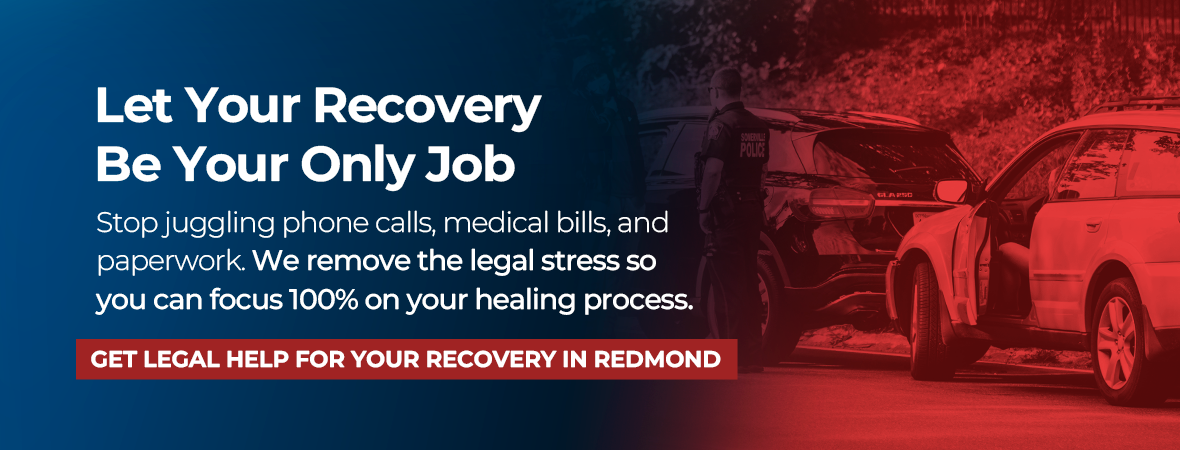
Car accidents result in immediate medical needs and long-term financial challenges. Those injured may face hospital bills, vehicle repairs, lost wages, and the complexities of insurance negotiations. Washington’s comparative fault system (RCW 4.22.005) allows victims to seek compensation even if they share some responsibility for the accident. This makes understanding legal rights essential for protecting one’s right to compensation.
The three-year statute of limitations creates urgency. This deadline begins on the accident date, making prompt action important for preserving evidence, including witness statements, police reports, and surveillance footage that may disappear over time.
No Fee Guarantee: You pay nothing unless we win your case and secure compensation for you.
Call for a Free Consultation
Common Accident Causes in Redmond
Distracted Driving
- Phone use and multitasking behind the wheel cause frequent collisions
- Intersections like Cleveland Street and Redmond Way see many rear-end crashes during rush hour
Distracted driving causes many Redmond accidents. Drivers checking phones, adjusting navigation systems, or managing other tasks fail to notice traffic changes, stopped vehicles, or pedestrians. Rear-end collisions at congested intersections often result from momentary inattention during stop-and-go traffic.
Police reports documenting distracted driving violations provide evidence supporting liability claims. Witness statements describing driver behavior and cell phone records showing usage at the moment of the accident strengthen cases against negligent drivers.
Impaired Driving
- Alcohol, drugs, and prescription medications impair a driver’s judgment and reaction time
- RCW 46.61.502 establishes strict penalties for driving under the influence
Impaired drivers cause serious accidents throughout Redmond. Alcohol and drug use slow reaction times, impair judgment, and reduce coordination. Even prescription medications can create dangerous impairment. Washington law imposes criminal penalties for DUI, and these violations establish liability in civil injury claims.
Blood alcohol tests, field sobriety test results, and officer observations documented in police reports prove impairment. Criminal convictions for DUI provide strong evidence supporting personal injury claims.
Speeding and Aggressive Driving
- Excessive speed reduces reaction time and increases crash severity
- Aggressive maneuvers, including unsafe lane changes, cause collisions
Speeding contributes to accidents on SR-520, Redmond Way, and other high-traffic corridors. Excessive speed reduces time available to react to traffic conditions and increases collision forces, worsening injuries. Aggressive driving, including tailgating, unsafe lane changes, and running red lights, creates additional risks.
Traffic citations for speeding or reckless driving establish liability. Accident reconstruction experts calculate vehicle speeds from skid marks, impact damage, and final vehicle positions, proving speed contributed to crashes.
Weather Conditions
- Rain and fog reduce visibility and create slick road surfaces
- Intersections along SR-520 and Avondale Road NE become hazardous during storms
Redmond’s frequent rain creates dangerous driving conditions. Wet pavement reduces tire traction, increasing stopping distances. Fog reduces visibility, making it challenging to see stopped vehicles, pedestrians, or traffic signals. These conditions contribute to multi-vehicle pileups and serious collisions.
While weather affects driving conditions, it does not eliminate driver liability. Drivers must adjust speed and following distance for conditions. Failure to drive safely in rain or fog establishes negligence when accidents result.
Common Injuries From Car Accidents
Whiplash and Soft Tissue Injuries
- Neck and back strain from sudden impact forces
- Symptoms may appear hours or days after accidents
Whiplash occurs when collision forces cause rapid back-and-forth neck motion, straining muscles and ligaments. Even low-speed rear-end collisions produce whiplash injuries, causing pain, stiffness, and reduced mobility. Soft tissue injuries throughout the body create similar symptoms.
Medical documentation from emergency rooms and follow-up appointments establishes injury severity. Physical therapy records show treatment duration and recovery progress, supporting compensation claims for medical expenses and pain.
Fractures and Orthopedic Injuries
- Broken bones require immediate treatment and extended recovery
- Severe fractures may need surgery and rehabilitation
Vehicle collisions produce forces that cause broken bones throughout the body. Arms, legs, ribs, and facial bones commonly fracture during impacts. Some fractures require surgical repair with pins, plates, or screws. Recovery involves immobilization, physical therapy, and gradual return to normal activities.
X-rays, CT scans, and surgical reports document fracture severity and treatment requirements. Orthopedic specialist evaluations establish whether injuries cause permanent limitations affecting work capacity or daily activities.
Head and Brain Injuries
- Concussions and traumatic brain injuries affect cognitive function
- Symptoms include headaches, memory problems, and concentration difficulties
Head impacts or rapid acceleration-deceleration can cause brain injuries even without direct blows to the head. Concussions represent mild traumatic brain injuries, causing temporary confusion, headaches, and cognitive problems. Severe brain injuries produce lasting impairments affecting memory, concentration, and emotional regulation.
Emergency room records documenting loss of consciousness, confusion, or amnesia establish initial injury severity. Neurological examinations and neuropsychological testing measure cognitive deficits and functional limitations supporting compensation claims.
Spinal Injuries
- Back and neck injuries range from muscle strain to spinal cord damage
- Severe injuries may cause permanent paralysis
Spinal injuries vary from muscle strains and herniated discs to spinal cord damage, causing paralysis. Neck and back injuries produce chronic pain, mobility limitations, and sometimes permanent disability. Spinal cord injuries represent catastrophic harm requiring lifetime care.
MRI scans reveal disc herniations, spinal cord damage, and nerve compression. Neurosurgical evaluations establish whether injuries require surgery and project long-term impacts on mobility and independence.
Washington Car Accident Laws
Comparative Fault System
- RCW 4.22.005 allows recovery even when victims share accident responsibility
- Courts assign fault percentages to all parties involved
Washington applies pure comparative fault to personal injury claims. Courts or insurance adjusters assign fault percentages to each party based on their contribution to accidents. A driver found 30% at fault for an accident can still recover 70% of their damages from other liable parties.
This system affects settlement values and litigation strategies. Even partial victim responsibility does not eliminate recovery rights. However, insurance companies attempt to maximize victim fault percentages to reduce payments. Evidence clearly establishing other drivers’ negligence becomes critical for limiting victim fault allocation.
Traffic Law Violations
- RCW 46.61 establishes traffic rules defining driver duties
- Violations provide evidence of negligence in accident claims
Washington traffic laws define how drivers must operate vehicles safely. Speed limits, right-of-way rules, traffic signal compliance, and safe following distances all create legal duties. Violations of these rules establish negligence when they cause accidents.
Police reports documenting citations for speeding, running red lights, or other violations prove drivers breached their duties. Traffic camera footage showing violations strengthens liability claims. Even without citations, evidence of rule violations supports negligence arguments.
Statute of Limitations
- RCW 4.16.080 requires filing lawsuits within three years of the accident date
- Missing this deadline eliminates the right to pursue compensation
Washington law establishes strict time limits for filing personal injury lawsuits. The three-year statute of limitations begins on accident dates. Failing to file within this period permanently bars legal recovery regardless of injury severity or liability clarity.
At National Injury Help, we understand how early legal consultation protects rights by ensuring compliance with deadlines. Our network of local attorneys in Washington tracks limitation periods and gathers evidence before it disappears. Witness memories fade, physical evidence deteriorates, and documentation becomes harder to obtain as time passes.
Determining Liability
Driver Negligence
- Speeding, distracted driving, and traffic violations establish liability
- Police reports and witness statements provide critical evidence
Most car accident claims involve negligent driver conduct. Running red lights, failing to yield right-of-way, following too closely, and unsafe lane changes all constitute negligence. Drivers violating traffic laws bear liability for resulting accidents and injuries.
Establishing driver negligence requires documentation. Police reports describe accident circumstances, document citations issued, and record officer conclusions about fault. Witness statements provide independent accounts of driver behavior. Accident reconstruction experts analyze physical evidence to determine how a crash occurred and which drivers caused it.
Employer Liability
- Companies face liability when employees cause accidents during work activities
- Negligent hiring, training, or vehicle maintenance creates additional claims
When commercial vehicle drivers cause accidents during work duties, their employers share liability. Delivery companies, trucking firms, and businesses with company vehicles face responsibility for employee negligence. Employer liability extends beyond the driver when companies fail to properly train employees, maintain vehicles, or supervise driver safety.
Employment records, driver qualification files, and vehicle maintenance logs establish employer negligence. Federal Motor Carrier Safety Regulations govern commercial trucking, and violations support liability claims against both drivers and companies.
Government Entity Liability
- Poor road maintenance and defective traffic signals contribute to accidents
- Claims against government agencies require notice within strict deadlines
Cities and counties maintain roads, traffic signals, and signage. Potholes, missing signs, malfunctioning signals, and other maintenance failures sometimes contribute to accidents. Government entities face liability when they knew or should have known about hazards and failed to address them.
Claims against government agencies require special procedures. Washington tort claims acts (RCW 4.92 and RCW 4.96) mandate formal notice to government entities within 60 to 120 days. Missing these short deadlines bars claims regardless of government negligence. Early attorney involvement ensures compliance with notice requirements.
Product Liability
- Defective vehicle parts, including brakes, tires, and airbags, cause accidents
- Manufacturers and distributors face strict liability for dangerous products
Vehicle defects sometimes cause or worsen accidents. Brake failures, tire blowouts, airbag malfunctions, and other defects create dangers. Washington product liability law (RCW 7.72) makes manufacturers, distributors, and retailers liable for defective products causing injuries.
Product liability claims require proving that a defect existed and caused harm. Manufacturing records, similar incident reports, and expert testimony establish defects. These claims provide additional compensation sources beyond driver liability.
Recoverable Compensation
Medical Expenses
- Emergency care, hospitalization, surgery, and rehabilitation costs
- Future medical needs, including ongoing therapy and medications
Medical expenses form a significant portion of car accident compensation. Emergency room treatment at Overlake Medical Center or EvergreenHealth, hospitalization, surgery, and initial recovery create immediate costs. Ongoing expenses include doctor visits, physical therapy, chiropractic care, and prescription medications.
Severe injuries require projecting future medical needs. Life care planners calculate anticipated costs for continuing treatment, therapy, medications, and medical equipment over victims’ lifetimes. This ensures settlements or verdicts provide adequate resources for long-term care.
Lost Income and Earning Capacity
- Wages missed during recovery periods
- Reduced future earning ability from permanent injuries
Car accident injuries prevent work during recovery. Pay stubs, tax returns, and employer letters establish pre-accident income and document lost wages. Compensation includes regular wages, overtime, bonuses, and benefits lost during recovery periods.
Permanent injuries reducing work capacity require a vocational expert evaluation. These specialists assess whether victims can return to their previous employment or must accept lower-paying positions requiring fewer skills or physical demands. Economic experts calculate present values of lifetime earnings losses.
Pain and Suffering
- Physical pain, emotional distress, and reduced quality of life
- Permanent disabilities increase non-economic damage awards
Non-economic damages compensate for intangible losses. Physical pain from injuries, emotional distress, including anxiety and depression, and reduced ability to enjoy life all warrant compensation. Victims unable to participate in hobbies, sports, or social activities suffer measurable quality-of-life losses.
Medical expert testimony, mental health professional evaluations, and family statements establish non-economic damage. Courts consider injury severity, recovery duration, and permanent limitations when calculating these damages.
Property Damage
- Vehicle repair or replacement costs
- Damaged personal property, including phones, laptops, and clothing
Vehicle damage represents obvious accident losses. Repair estimates from certified mechanics establish costs to fix damaged vehicles. When repair costs exceed vehicle values, insurance must pay fair market values before accidents. Diminished value claims address reduced resale values even after repairs.
Personal property damaged in accidents also qualifies for compensation. Phones, laptops, glasses, and clothing destroyed during crashes create compensable losses. Receipts or replacement cost estimates support these claims.
Wrongful Death Damages
- RCW 4.20.010 allows family members to pursue death claims
- Compensation includes funeral costs and loss of financial support
Fatal accidents enable surviving family members to pursue wrongful death claims. Spouses, children, and parents can recover funeral and burial expenses, loss of financial support the deceased would have provided, and loss of companionship and guidance.
These claims require proving that the accident negligence caused death. Economic experts calculate lost lifetime earnings, benefits, and household services. Testimony from family members, friends, and clergy establishes emotional losses and the deceased’s family role.
Why Legal Representation Helps
Car accident claims involve complex legal issues requiring knowledge of Washington statutes, insurance practices, and court procedures. Attorneys coordinate with medical experts, accident reconstruction specialists, and economists to build comprehensive cases.
Evidence preservation requires immediate action. Traffic camera footage gets erased routinely. Witnesses relocate or forget details. Physical evidence disappears. Early attorney involvement ensures critical evidence remains available through preservation letters and prompt investigation.
Insurance companies offer higher settlements to represented claimants because attorneys understand claim valuation and will litigate when necessary. Calculating full compensation requires analyzing current and future medical needs, lost earning capacity, and quality-of-life impacts; it is an analysis that requires expert assistance.
Attorneys handle all insurance communications, preventing statements that could reduce compensation. They negotiate using documented evidence and expert opinions. When negotiations fail, they litigate through trial and appeals if necessary.
Taking Action After a Car Accident
At National Injury Helo, we recognize that car accidents can lead to immediate medical needs and long-term financial challenges. With Washington law allowing three years to file claims, prompt action to preserve evidence is essential. Our dedicated legal team is here to assist you in obtaining medical treatment while ensuring your documentation supports your compensation claims.
We prioritize securing a legal consultation after your accident to help protect your rights. Our knowledge of Washington’s comparative fault system and insurance practices equips us to maximize your compensation by identifying all potentially liable parties.
With a contingency fee structure, you won’t pay anything up front. You’ll only owe us if we successfully recover compensation for you, allowing you to focus on your recovery without financial stress.
If you’ve experienced a car accident in Redmond, we encourage you to contact us for a confidential case evaluation. At National Injury Help, we work with experienced attorneys who are ready to discuss your unique circumstances and outline your legal options. Reach out to our team today by calling (866) 721-4426 to take the first step toward securing the justice you deserve.