










Injuries from dog bites can be serious and overwhelming. Reach out to National Injury Help’s Auburn dog bite lawyer at 1-866-932-4817 to secure the compensation you deserve.
Dog bite incidents occur throughout the region, from the trails near Soos Creek to sidewalks along Auburn Way S, from neighborhoods in Lakeland Hills to commercial zones near Muckleshoot Casino.
- According to the World Health Organization (WHO) and other global health sources, an estimated 4.5 million dog bites occur annually in the United States. These incidents represent a significant public safety concern.
- Washington state experiences its share of these incidents across King County communities, from Auburn to nearby cities such as Kent, Federal Way, Bonney Lake, Enumclaw, and Pacific.
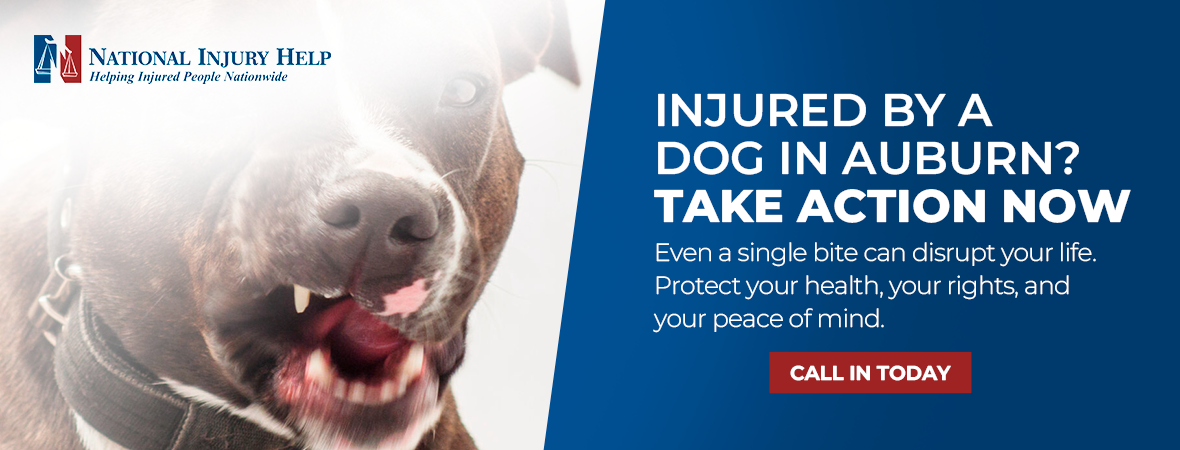
Victims face mounting medical bills, lost wages, scarring, psychological trauma, and uncertainty about their legal rights.
National Injury Help provides immediate case evaluations 24/7 to help injured individuals understand their options. Our firm can connect victims with Auburn dog bite lawyers who can fight back against insurance companies that minimize claims.
No Fee Guarantee: You pay nothing unless we win your case and secure compensation for you.
Call for a Free Consultation
Washington’s Strict Liability Dog Bite Law
Dog owners are liable regardless of the animal’s history or the owner’s knowledge of viciousness. The law protects victims who are injured in public places or on lawfully private property.
Washington operates under one of the nation’s strongest dog bite statutes. RCW 16.08.040 establishes strict liability for dog owners, meaning victims do not need to prove that the dog had previously bitten anyone or that the owner knew the animal was dangerous. The statute states:
“The owner of any dog which shall bite any person while such person is in or on a public place or lawfully in or on a private place … shall be liable for such damages … regardless of the former viciousness of such dog or the owner’s knowledge of such viciousness.”
This legal framework differs significantly from the “one-bite rule” in many other states.
Where the Law Applies and What It Covers
The statute excludes police dogs on duty. For victims, this means the legal burden shifts away from proving negligence to proving the bite occurred and quantifying damages.
Protection extends to all locations where the victim had a legal right to be, whether delivering mail to houses on Lake Tapps, visiting a friend in Lakeland, walking through downtown Auburn, or shoulder walking along local streets.
Additional Protections Under Washington’s Dangerous Dog Statutes
Washington law also governs “potentially dangerous” and “dangerous” dogs. These definitions and penalties impose extra responsibilities on owners whose animals pose ongoing risks.
If a dog inflicts bites on humans or domestic animals without provocation, authorities may declare it “potentially dangerous.” If a dog aggressively attacks and causes severe injury or death to a human, the owner may face Class C felony charges.
How Washington Law Defines a Dog Bite When Owners Claim Playing vs. Attacking
Under Washington’s strict liability dog bite law (RCW 16.08.040), a victim doesn’t have to prove that a dog meant to attack. What matters is that a bite actually happened.
The law doesn’t clearly define what counts as a “bite,” but legal experts note that even if a dog’s teeth touch someone during playful behavior (without provocation), it could still be considered a bite under the statute. The key point is that intent to harm isn’t required; however, the person claiming the injury must demonstrate that the dog’s teeth made contact and caused some injury.
Common Dog Bite Injuries and Long-Term Consequences
Attacks often cause deep tissue damage, nerve injury, permanent scarring, and psychological trauma. Children, elderly individuals, and delivery workers face disproportionate risk.
Victims may sustain:
- Lacerations requiring extensive suturing
- Muscle/tendon damage needing surgery
- Nerve injuries with loss of sensation or function
- Bone fractures (especially in arms/hands when defending)
- Infections (e.g., cellulitis, sepsis)
- Permanent disfiguring scars (especially on face/neck)
Children are especially vulnerable: their height places their face closer to a dog’s mouth. An attack on a child walking near Lea Hill or playing at the Auburn Recreation Center may cause physical and emotional consequences lasting a lifetime.
Psychological Trauma and Mental Health Impact
Beyond physical trauma, victims often develop PTSD (nightmares, flashbacks), cynophobia (fear of dogs), anxiety or panic attacks during animal encounters, depression tied to disfigurement or disability, and, in children, developmental impacts affecting confidence, social interaction, and relationships with animals. These conditions might require years of mental health treatment, compounding the overall damage.
The Financial Burden of Dog Bite Injuries
Expenses go beyond emergency care. Victims face hospital stays, reconstructive surgeries, ongoing wound care, physical and occupational therapy, psychological counseling, medications, lost income during recovery, and possibly lifetime care for disabilities or disfigurement.
In serious Auburn-area cases (near Auburn Station, along Auburn Way, or in neighborhoods like Lakeland Hills), costs can quickly climb into tens or hundreds of thousands. Average Washington dog bite settlements are estimated to be around $30,000 to $50,000, though severe cases with permanent disfigurement, disability, or psychological damage may reach much higher.
Special Considerations for Children and Vulnerable Populations
Children suffer disproportionately severe facial injuries and psychological trauma. Washington law acknowledges the lifetime impact of disfigurement on minors.
Unique Risks for Children
Because of their height, children are at high risk for facial injuries when attacked. A bite suffered while walking to school or playing in local parks inflicts both physical and emotional scars. Developmental impacts can persist into adulthood.
Valuing the Lifetime Impact of Childhood Injuries
Courts consider years of living with scars, revision surgeries, ongoing therapy, and psychological burdens. Parents claiming on behalf of minors may work with Auburn dog bite attorneys skilled at presenting these long-term damages to insurers or juries.
Elderly Victims and Heightened Vulnerability
Older adults may be especially at risk during dog attacks. Due to reduced mobility, they might be less able to fend off a dog, and they can sustain secondary injuries like fractures or head trauma from falls.
Seniors often recover more slowly, and they may face a higher risk of infection, all of which can contribute to more significant medical expenses and potentially larger legal claims, depending on how severe their injuries are.
Occupational Hazards for Delivery and Service Workers
Mail carriers, package delivery drivers, and service personnel who legally enter properties across Auburn’s neighborhoods face a high risk. For example, routes through Lea Hill, West Hill, or Auburn-sensitive streets may lead to encounters with dangerous dogs. Claims for these workers must account for lost income, potential permanent disability, and intersections with workers’ comp rules.
Where Dog Attacks Typically Happen in Auburn
Incidents occur in parks, neighborhoods, commercial zones, and along trails. Both public spaces and private properties are risk zones. While there’s no comprehensive public dataset breaking down bite incidents by Auburn neighborhood, the following are among the places where dog attacks are reasonably likely, based on general premises liability patterns.
Parks, Trails, and Recreational Areas
Dog bite incidents are not limited to homes. Public paths, recreational areas, and green spaces in and around Auburn may pose risks, especially in areas with heavy foot traffic or where dogs are allowed to run off-leash.

Residential Neighborhoods and Private Properties
Attacks may also occur when:
- Visitors lawfully enter property in areas such as Lakeland Hills, Lea Hill, or near the Auburn Golf Course
- Neighbors interact across fences
- Service providers work at residences
Commercial zones are not immune: customers entering businesses on Auburn Way S, people in parking lots near Auburn Plaza, or pedestrians walking near storefronts can be targeted for attack.
Regional Risk Across South King County
The danger extends across communities. In Kent, Enumclaw’s edges, Federal Way, and Pacific, dog bite injuries occur in parks, trails, and residential streets. Auburn personal injury lawyers in National Injury Help’s network are familiar with this local geography, from Auburn’s arterial corridors to quieter suburban neighborhoods.
Building a Strong Dog Bite Claim in Washington
Washington’s strict liability statute removes many defense arguments but demands thorough proof of damages. Immediate documentation, medical treatment, and witness statements may strengthen claims.
Seek Help
Victims must seek medical attention immediately (for both health and record creation). Whether treated at Auburn Regional Medical Center, MultiCare Auburn, or local urgent care facilities, ensure that providers document the incident, photograph injuries, and note both visible and hidden trauma.
Gather Critical Evidence
Take detailed photos of injuries at multiple healing stages, document the location (including signage, fences, and any lack thereof), collect witness contact information, report to Auburn Animal Control, and preserve damaged clothing or items. These are key to proving severity and circumstances.
Prove Legal Elements Under Washington Law
Victims must show that the defendant owned or controlled the dog that bit them. Also, that the attack occurred in a public place or while the victim was lawfully present, and the victim suffered damage.
Strict liability removes the need to prove the dog’s known viciousness or negligence. The focus is on documenting actual damages (medical costs, lost wages, rehab, mental health care, pain/suffering, disfigurement, diminished quality of life).
Countering Insurance Company Tactics
Insurers often argue provocation, trespassing, or overstate the victim’s role. A strong Auburn dog bite lawyer can counter these with detailed evidence, expert testimony, mental health documentation, and clear narratives of how the injury altered daily life. In Auburn cases (e.g., near Auburn Station, on Auburn Way, or adjacent to Muckleshoot Casino), familiarity with local patterns and evidence is invaluable.
Dealing with Insurance Companies and Property Owner Liability
Homeowners’ insurance usually covers dog bite liability, but insurers aggressively minimize payouts. Landlords or property owners may also share liability for knowingly hosting dangerous animals or failing to take appropriate action.
Homeowners Insurance and Coverage Issues
Most dog bite claims come through homeowners’ liability policies. Insurers may attempt to devalue the claim by using recorded statements, making quick and lowball offers, claiming provocation or trespass, or denying psychological damage. Auburn dog bite law firms typically counter by comprehensively documenting value and future needs.
Landlord and Property Owner Liability
In Auburn, landlords or property managers may be liable if they allowed a dangerous dog on premises, ignored complaints, or failed to warn guests. For example, a rental property near Auburn Station or in Lea Hill with repeated aggressive dog reports might share liability.
Understanding Auburn Municipal Dog Laws and Local Requirements
Auburn’s city code includes additional, specifically enforceable dog rules:
- Leash/restraint requirement: Dogs off their owner’s premises must be leashed or otherwise under restraint.
- Definition of “under restraint”: Confinement in a building/fenced yard, leash, or tether prevents access to public property.
- Off-leash area: Auburn’s only off-leash dog park is Roegner Park.
- Dangerous dog enclosure height requirement: Enclosures must be at least 6 feet tall unless they have a secured top to prevent escapes.
- Muzzle standard: Muzzles must not injure the dog or block breathing/vision, only to prevent biting.
These local rules build upon state law and may strengthen or specify constraints in Auburn-specific cases.
What to Expect in the Legal Process
Most dog bite cases settle before trial, but injured victims may need to be prepared for litigation to secure a fair outcome.
Initial Consultation and Case Evaluation
Victims consult an Auburn injury attorney at National Injury Help and describe the location and injuries. Attorneys request medical records, photos, and incident details, evaluate liability under Auburn Code, and estimate damages. Consultation is free.
During evaluation, attorneys identify the dog owner and insurance policies to assess whether landlords or property managers share liability.
Investigation and Evidence Gathering
Once engaged, lawyers collect medical records, incident reports (for example, from Auburn Animal Control or King County), witness statements, photos of the location/fence/dog housing, and the animal’s history. Experts (medical, plastic surgery, mental health, dog behavior) may be retained, especially in serious injury cases.
Demand and Negotiation Phase
After medical care is stabilized and recovery plateaus (at maximum medical improvement), attorneys prepare a demand package that combines a narrative, evidence, billing records, lost earnings, and demands for compensation. Insurers usually counter with low offers.
Attorneys may trade multiple rounds, adding evidence or comparable verdicts to pressure negotiation. Lawyers experienced in King County/Auburn cases can strategically leverage local results.
Filing a Lawsuit and the Discovery Process
If no fair settlement emerges, a lawsuit is filed in King County Superior Court (Auburn falls under that jurisdiction). The complaint cites RCW 16.08.040, Auburn’s city code statutes, identifies the dog owner and possibly co-liable parties, and details damages.
The statute of limitations in Washington is three years from the date of the injury, although waiting until the deadline is risky. Discovery includes written interrogatories, document requests, depositions, independent medical exams, and insurance disclosures.
Mediation and Settlement Conferences
Before trial, courts often require mediation. Parties present case strengths and weaknesses and attempt resolution. Many dog bite cases settle at or near mediation. Experienced attorneys use prior discovery to strengthen their arguments, and Auburn area cases often settle when insurers see evidence of serious injury and potential legal exposure.
Trial Preparation and Courtroom Proceedings
If mediation doesn’t lead to a settlement, preparing for trial typically includes:
- Preparing expert witnesses to explain injuries, prognosis, or dog behavior
- Organizing exhibits such as photos, medical records, and demonstrative aids
- Coaching the client on testimony and courtroom procedures
- Drafting jury instructions that reflect Washington’s strict liability rules
Presenting persuasive arguments that highlight the impact of the injury, changes to daily life, and the legal duty of the dog owner
Under Washington’s strict liability law, plaintiffs have a simpler path: they generally only need to prove that the defendant owned or controlled the dog, the victim was lawfully present, and that the bite caused injury or damages. There’s no need to show the dog had a history of aggression or that the owner was negligent.

Post-Trial and Appeals
After a verdict, the defendant may file motions to alter or reduce the judgment. If those fail, they may appeal to the Washington Court of Appeals, which reviews legal errors, not fact findings. Appeals can extend resolution by a year or more. If the plaintiff loses, they may appeal if legal error is involved.
Collecting Judgments and Settlements
Once a settlement is finalized or a judgment is entered, attorneys ensure that payment is made. Under Washington law, insurers are required to issue payment within 15 business days after receiving properly executed releases or settlement documents.
If there are healthcare liens, unpaid bills, or other obligations, these must often be resolved before full disbursement. In practice, disbursement typically takes 30 to 45 days, depending on the complexity. If policy limits are insufficient or the defendant is uninsured, collection may involve liens on property, wage garnishment, or payment plans. Attorneys handle these logistics.
Timeline Expectations
Timelines for dog bite cases vary. Simple cases (clear liability, good evidence, solid insurance) may resolve in 6-12 months. More complex or disputed cases may run 18-36 months. If trials and appeals are involved, the timeframe may exceed three years.
Auburn accident attorneys in National Injury Help’s network can keep clients informed, pressure insurers, and are ready to litigate when needed.
Why National Injury Help and the Right Legal Partnership Matter
National Injury Help connects Auburn victims with experienced attorneys via its national network. Here are some advantages of consulting our lawyer:
Level the Playing Field Against Insurance Companies
Dog bite victims in Auburn and King County confront insurers with deep pockets and legal teams. Tackling them without representation often results in underpaying claims.
National Injury Help has built a network of attorneys familiar with Washington’s strict liability law, King County courts, local medical experts, and prior dog bite claims in Auburn and South King County.
Free Case Evaluations and No Upfront Costs
It begins with a free case evaluation available 24/7. Victims owe no attorneys’ fees unless compensation is recovered. This ensures those suffering attacks in Auburn’s parks, neighborhoods, or commercial zones can access strong representation.
Elite Legal Partnerships and Resources
At National Injury Help, we partner with established personal injury firms to provide resources, expert connections, and relationships with insurers, as well as readiness to litigate. Victims in Auburn may benefit from that depth of experience.
The Difference Experience Makes
Because NIH’s network includes seasoned trial attorneys and significant settlement experience, many clients are able to negotiate stronger compensation than they might without representation. Whether the attack happened in Auburn’s downtown, near Creek Street, or on the outskirts, victims deserve a legal partner that can go toe-to-toe with insurers.
Understanding the Statute of Limitations
Washington gives three years from the date of injury to file suit; delaying weakens evidence, memories fade, and negotiating leverage diminishes. Early consultation ensures the preservation of evidence and an understanding of one’s rights.
Preventing Dog Bites Through Community Safety and Responsible Ownership
Responsible ownership, training, and awareness reduce attacks. Washington and Auburn both impose duties on owners. Owners in Auburn must follow both state law and local code:
- Maintain secure fencing and enclosures (in Auburn, at least 6 feet high or with secured tops for dangerous dogs).
- Use leashes in public or non-off-leash areas (Auburn’s leash law requires dogs off their premises to be leashed).
- Obey off-leash dog park rules (the only city-sanctioned off-leash park is Roegner Park).
- Socialize and train dogs, especially those that show aggressive traits.
- Vaccinate and maintain veterinary care.
- React to warning behavior early (growling, stiff posture, baring teeth).
Recognizing Warning Signs and Dangerous Behaviors
Dogs often signal before attacking. Watch for raised hackles, stiff posture, a direct stare, pulled lips, pinned ears, a low growl, and a tense body. When walking through trails, neighborhoods, or parks in Auburn, avoid direct stare, move slowly, keep hands at sides, and don’t approach dogs eating or sleeping.
Protecting Children From Dog Attacks
Children are vulnerable. In Auburn, parents and caregivers should teach kids never to approach unfamiliar dogs, never run or scream at them, stand still like a tree if approached, and protect their mouth/face when knocked down. Schools and community groups in Auburn can help by teaching these safety rules in local recreation programs.
Community Reporting and Animal Control
Auburn residents should report aggressive dog behavior or attacks to Auburn Animal Control as soon as possible. Doing so generates official documentation, triggers investigations, and can lead to dangerous dog declarations. Even non-injury threatening behavior is worth reporting.
Note: The city, not the dog owner, bears the burden of proof when determining whether a dog is dangerous. Auburn Animal Control also handles complaints about barking and other enforcement issues.
Creating Safer Public Spaces
Property owners and managers have a crucial role:
- Posting signage to warn visitors
- Enforcing leash rules
- Restricting access to aggressive dogs
- Ensuring fences are secure
Businesses that allow dogs (like pet-friendly restaurants or outdoor seating) should require leashes and policies. Parks and city planners must balance off-leash dog areas (only Roegner Park in Auburn) with safe walking zones elsewhere.
Training and Socialization
Professional dog training and behavioral intervention reduce bite risks. Owners in Auburn may access local obedience schools and behaviorists early. Early socialization in community settings helps mitigate fear-based aggression.
A Decade of Results and National Resources
National Injury Help’s network has spent years connecting injured parties to quality attorneys. Whether the bite occurred near Auburn Station, in Lakeland Hills, along Auburn Way, or adjacent to the Muckleshoot Reservation, help is available.
Time is critical: evidence must be preserved, witnesses contacted, and claims filed while memories are fresh. Free consultations are available 24/7. No fees are owed unless compensation is recovered.
Dog owners must be held accountable when their pets injure others. Victims deserve full compensation for medical costs, lost income, pain and suffering, scarring, disability, and psychological harm.
Our firm links injured individuals with legal resources to fight for justice. Schedule a free consultation with an Auburn dog bite lawyer today.